Ferdowsi Summer School of Modern Persian
July 20 - August 7, 2026
Online
Instructor: Maryam Torabi
Languages: Persian, English
Duration: 3 weeks (45 hours)
Frequency: 5 days per week
Duration of a Session: 3 hours
Days: Monday to Friday
Hours: 9 PM – 12 AM (Yerevan Time)
Deadline for Applications: June 30
Classes Start: July 20
Location: Online (Zoom)
Requirements: Lower intermediate/Intermediate level of Modern Persian
Participation Fee: 780 USD* (680 USD for applications before June 7)
Activities: speaking; listening; reading; formalities and politeness (ta’ārof).
Registration: To apply, please click the “Submit an application” button above. Complete all required fields and submit. Accepted applicants will receive further instructions on participation.
Payment Method: Bank Transfer
Note: All materials will be provided by the instructor
*10% discount is provided for all who have taken a class with Ferdowsi School previously.
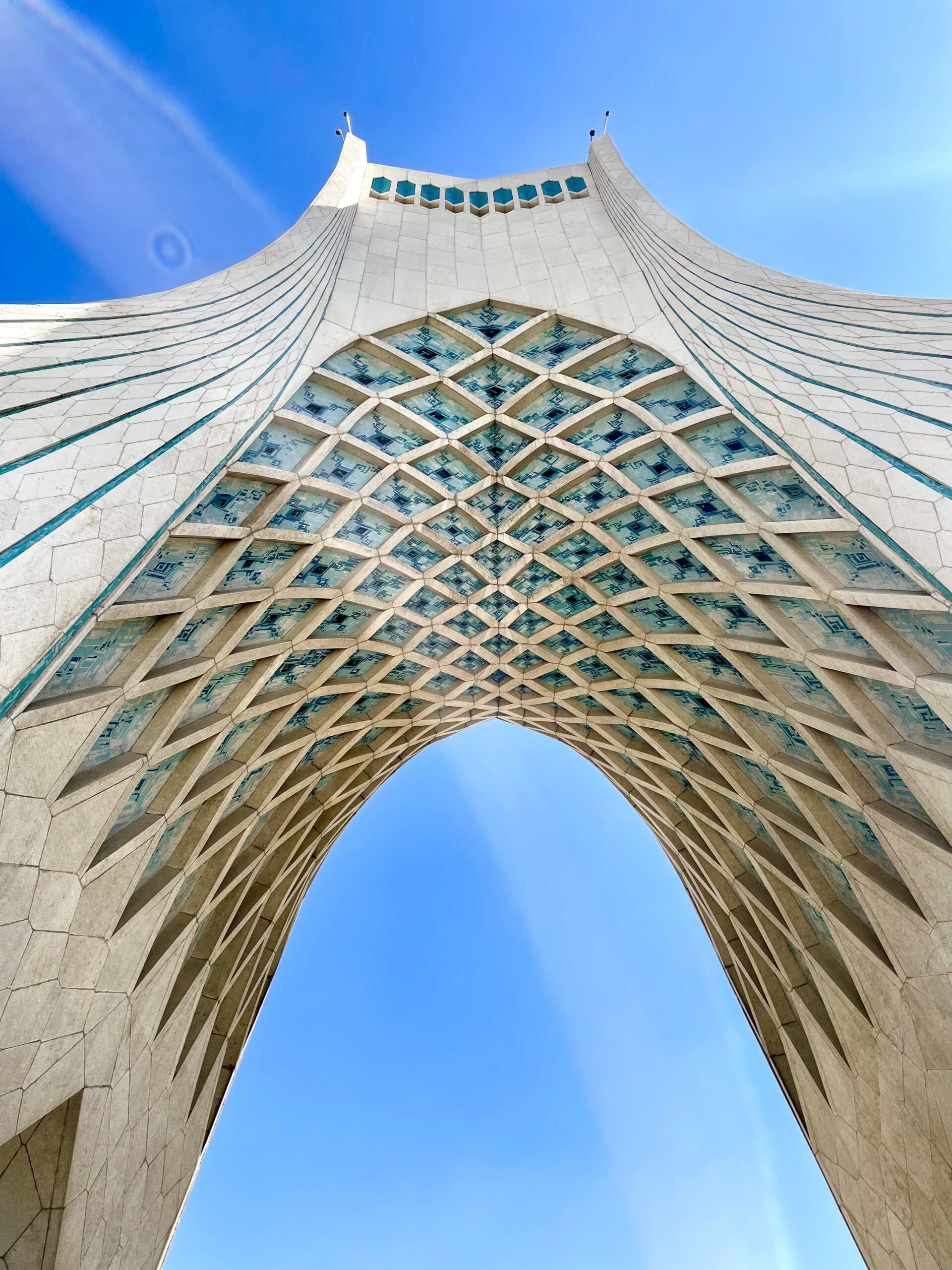
Azādī Tower in Tehran (photo by R. Nikoghosyan)
Course Overview
The Ferdowsi Summer School of Modern Persian is an intensive online summer program designed for students of Persian at the lower- to upper-intermediate levels. The course lasts three weeks, with classes meeting every day from Monday to Friday for three hours a day, providing participants with a total of 45 hours of intensive, high-quality instruction.
The program is designed to strengthen all major language skills through an immersive and practical approach to modern Persian. Instruction includes intensive and immersive practice in reading, listening, and speaking, helping participants become familiar with both modern literary Persian and authentic contemporary spoken Persian. Throughout the course, students will work with a wide range of real-life materials, including mainstream media texts, Persian films, interviews, informal speeches, Instagram videos, video blogs, and other authentic audio-visual sources.
Particular emphasis is placed on spoken Persian and communicative competence. Each class includes a dedicated conversation section in which participants engage in discussions and interactive speaking exercises on a variety of topics. At the beginning of these sessions, the instructor introduces essential expressions, politeness formulas (ta’rof), and culturally significant patterns of speech that are indispensable for effective communication in Persian-speaking environments. These intensive speaking sections are designed not only to improve fluency and pronunciation, but also to help participants develop cultural sensitivity and a deeper understanding of authentic Persian communication.
By the end of the program, participants will have gained greater confidence in understanding and using both literary and colloquial Persian, while also acquiring a more immersive and culturally informed experience of contemporary Persian language and speech.
By participating in the Summer School, students will:
- develop the ability to understand authentic spoken Persian from films, interviews, podcasts, and social media videos;
- significantly extend their vocabulary
- get content recommendations from the instructor
- become familiar with everyday colloquial Persian and naturally used conversational expressions;
- improve their confidence in speaking Persian through daily guided discussions and interactive practice;
- acquire essential politeness formulas and culturally appropriate patterns of communication used in Iranian society;
- strengthen their listening comprehension through intensive work with authentic audio and video materials;
- gain a deeper understanding of contemporary Iranian culture, society, and modes of expression through language itself.
Course Methodology
The course will be conducted entirely in Persian. Explanations of cultural references, and various nuances of expression will be given in Persian, allowing participants to immerse themselves fully in the language from the very beginning.
The only exceptions to this rule might be grammatical and linguistic nuances, which are more helpful if given in English at this stage.
The primary goal of this approach is to create an authentic Persian-language environment in which students gradually develop the ability to think, interpret, and communicate directly in Persian.
A central methodological principle of the course is the use of authentic real-life materials produced by native speakers for native speakers, rather than relying primarily on artificially constructed didactic texts that may at times be detached from contemporary linguistic reality. The course is therefore designed to familiarize participants with the living language as it is naturally used in modern Persian-speaking contexts.
Materials used throughout the program will include authentic texts and media drawn from a wide range of contemporary sources, such as news outlets, social media profiles, colloquial blogs, online discussions, comments on social media posts, interviews, podcasts, and YouTube or Instagram videos. Through engagement with these materials, participants will learn to navigate both literary and colloquial Persian while becoming familiar with the stylistic, grammatical, phonetic, and cultural nuances that characterize authentic communication.
Particular emphasis will be placed on developing the practical skills necessary for independent interaction with Persian-language materials outside the classroom. The course aims to provide participants with the linguistic and cultural “toolbox” needed to understand and interpret real Persian speech and writing in a variety of contexts.
For example, in the listening sections, participants may work with short Instagram video posts or other forms of spontaneous colloquial speech. Together with the instructor, they will analyze the grammatical, phonetic, and stylistic features of the language used in these materials before engaging directly with the content itself. This approach enables students not only to improve comprehension, but also to develop familiarity with naturally occurring Persian speech patterns and contemporary modes of expression.
Class Structure
The Summer School will is organized thematically into three key sections: the Cultural Section, the Spoken Section, and the Historical and Political Section.
Each class is three hours long, divided into three parts.
First, the class begins with a reading session: 50 minutes of reading and analysis of a selected text, followed by a 15-minute break.
Secondly, we move into an listening practice session. During this hour, participants engage with a curated video, audio, or documentary. Under the instructor’s guidance, they analyze the speech, focusing on expressions, colloquialisms, and cultural nuances. Finally, the class ends with a combined discussion and speaking practice. Participants review key phrases, such as ta’ārof and politeness formulas, before engaging in guided conversations, which strengthen their spoken skills.
Throughout the course, all instruction will be conducted in Persian. Explanations of grammar, linguistic details, and cultural nuances will be provided in Persian, except for occasional clarifications of particularly complex grammatical points.
Syllabus outline
For full syllabus see here.
Week 1. Cultural Talks: Iranian Festivals and Films
Day 1. Asghar Farhādī. The Separation
Day 2. Šab-e Yaldā
Day 3. ‘Abbās Kiārostamī
Day 4. Nowrūz
Day 5. History in Iranian Cinema
Week 2. Spoken Persian: From the Streets of Tehran to the Alleys of Instagram
Day 1. Dustī
Day 2. Ešq
Day 3. Fāmīl
Day 4. Mosāferat
Day 5. Bedūn-e Ta’ārof
Week 3. Iran, Past and Present: The Political & Historical Discourse
Day 1. The Strait of Hormuz
Day 2. The War
Day 3. The Achaemenid Empire
Day 4. The Sasanian Empire
Day 5. The Pahlavi Dynasty