Classical Persian through Living Books: Introduction to Persian Manuscripts
June 22 - July 2, 2026
Online
Instructor: Ruben S. Nikoghosyan
Languages: English, Persian
Duration: 2 weeks, 8 days (16 hours)
Frequency: 4 classes per week (Monday-Thursday)
Duration of each Class: 2 hours (6 pm Yerevan Time)
Participation Fee: 280 USD
Deadline for Applications: June 15
Location: Online (Zoom)
Level of Persian: Intermediate, Advanced
Manuscripts:
- Kitāb al-abniya ‘an haqāiq al-adwiyya. 1056 AD
- Florence Shahnameh, 1217 AD, Florence
- Naṣr-Allāh Munšī, Kalīlah va-Dimnah (Persian MS 68), 1219 AD, Manchester
- Prince Baysunghur’s Rose Garden (Gulistan) by Sa`di (Per 119), 1427 AD
- Dawlatshāh Samarqandī (d. ca. 1494). Taẕkirat ul-Shuʻarā (Persian MS 54). Date 1749.
- Various other manuscripts
Registration: To apply, please click the “Apply” button above. Complete all required fields and submit. Accepted applicants will receive further instructions on participation.
Note: All materials will be provided by the instructor
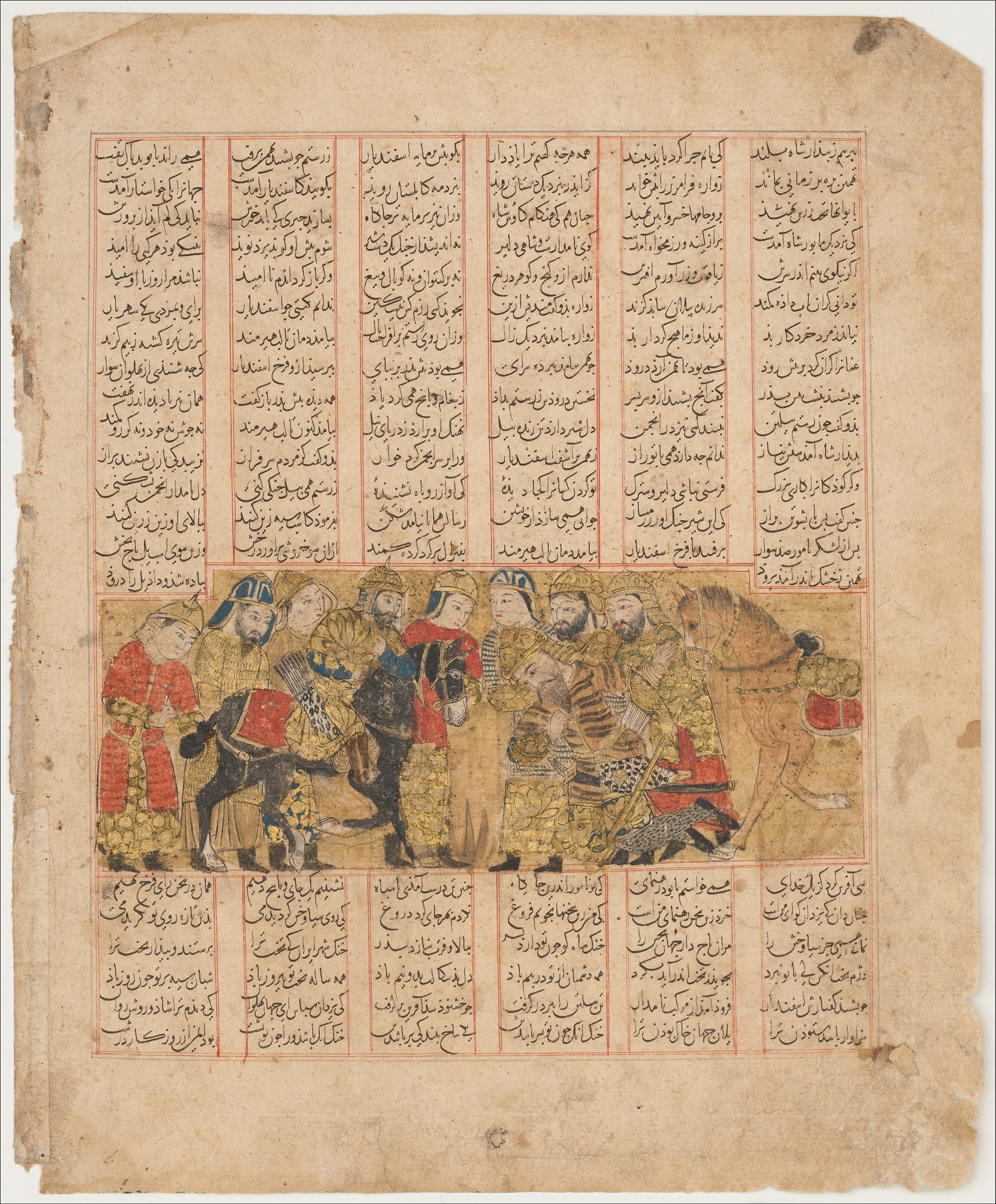
Background Manuscript: A scene from Assār-e Tabrīzī’s Mehr-o Moštarī. (c) The David’s Collection
Course Overview
The course explores the history of the Persian palaeographical tradition and aims to provide participants with the necessary tools to work independently with literary Persianate manuscripts.
During the course, we will examine a variety of manuscripts, practice reading them, and explore the subtleties of the Persian manuscript tradition.
Through detailed readings and analysis of different styles, we will trace the development of Persian calligraphical and orthographical practices, paying close attention to the evolution of Persian orthography in the Arabic script.
This comprehensive approach will help participants develop a deeper appreciation of Persian manuscript culture and engage critically with both early and later examples of Persian writing.
Outline
This intensive two-week online course delves into the manuscript traditions of Persianate societies, equipping participants with the skills to read and interpret Classical Persian handwritten materials independently.
Spanning Monday to Thursday, each two-hour class explores the rich heritage of Persian manuscripts across diverse chronological and geographical contexts.
Participants will examine a range of scripts and styles, focusing on naskh and nasta‘liq, while tracing the evolution of Persian orthographical and grammatical conventions. The course introduces historical manuscripts from early Persian documents of the early 10th century to iconic works like the Baysunghurī Gulistān (15th c.) and the Shāhnāma-yi Tahmāspī (16th c.).
Through direct engagement with manuscripts, participants will gain insights into the interplay between Persianate literary traditions and manuscript art, as well as the distinctive features of Classical Persian orthography and phonetics. By the end of the course, participants will be ready to approach Persian manuscripts with confidence, and deal with them independently.
Main manuscripts
- Kitāb al-abniya ‘an h ḥaqāyiq al-adwiyya. 1056 AD, Vienna
- Florence Shāhnāma, 1217 AD, Florence
- Naṣrullāh Munšī, Kalīla va-Dimna (Persian MS 68), 1219 AD, Manchester
- Prince Baysunghur’s Rose Garden (Gulistan) by Sa`dī (Per 119), 1427 AD, Chester Beatty
- Dawlatshāh Samarqandī (d. ca. 1494). Taẕkirat ul-Shuʻarā (Persian MS 54). Date 1749.
- Various other manuscripts
By taking the course, the participants will gain:
- Ability to read and interpret Classical Persian manuscripts.
- Familiarity with key scripts, including Nasq and Nasta‘liq.
- Knowledge of Persian orthographical traditions and their evolution.
- Insights into historical manuscripts from diverse regions and periods.
- Understanding of the relationship between Persianate literature and manuscript art.
- Skills to work independently with Persian manuscripts.
Class Structure
The course consists of 8 classes, with two-hour sessions held from Monday to Thursday during the two weeks. Below is a breakdown of the main activities during each class:
- Discussion of questions: Reviewing and reflecting on homework manuscripts (20 minutes)
- Reading and analysis: Close reading of selected manuscripts with paleographical and philoloical commentary (45 minutes)
- Break: Short pause to refresh (15 minutes)
- Reading and analysis (45 minutes)
- Q&A and wrap-up: Open discussion and addressing participants’ questions (10 minutes)
Students are encouraged to actively participate and share their perspectives, creating a collaborative learning environment.
Class Structure
This intensive introductory course on Persian manuscripts employs a holistic approach to familiarize students with the origins and development of the Persian palaeographical tradition. Beginning with the earliest surviving monuments of New Persian from the 10th century, the course explores the foundational stages of Persian calligraphical traditions.
Starting from the very first day, the participants will examine the earliest manuscripts and trace the evolution of Persian written traditions through later periods.
Throughout the course, participants will analyze various scripts, writing styles, and orthographical conventions used in Persian manuscripts. By engaging with manuscripts from different genres, students will explore the diverse paleographical practices that shaped Persian texts over time.
By the end of the course, this comprehensive approach aims to provide students with a solid foundation in understanding and interpreting Persian manuscripts, equipping them with essential knowledge to delve deeper into the field.
testimonials
PS. Hoping that the School comes up with in-person Summer/Winter School where we can travel, read and learn together :)