From Khotan to Cairo: Introduction to Early Judeo-Persian

July 15 - September 2, 2026

Weekly (Online)

Instructor: Ruben S. Nikoghosyan

Languages: English, Persian

Duration: 8 weeks (16 hours)

Frequency: 1 class per week (Saturday)

Duration of each Class: 2 hours (starting 6 pm Yerevan time)

Participation Fee: 300 USD

Deadline for Applications: July 1

Location: Online (Zoom)

Required level of Persian: Intermediate

Registration: To apply, please click the “Apply” button above. Complete all required fields and submit. Accepted applicants will receive further instructions on participation.

Note: All materials will be provided by the instructor

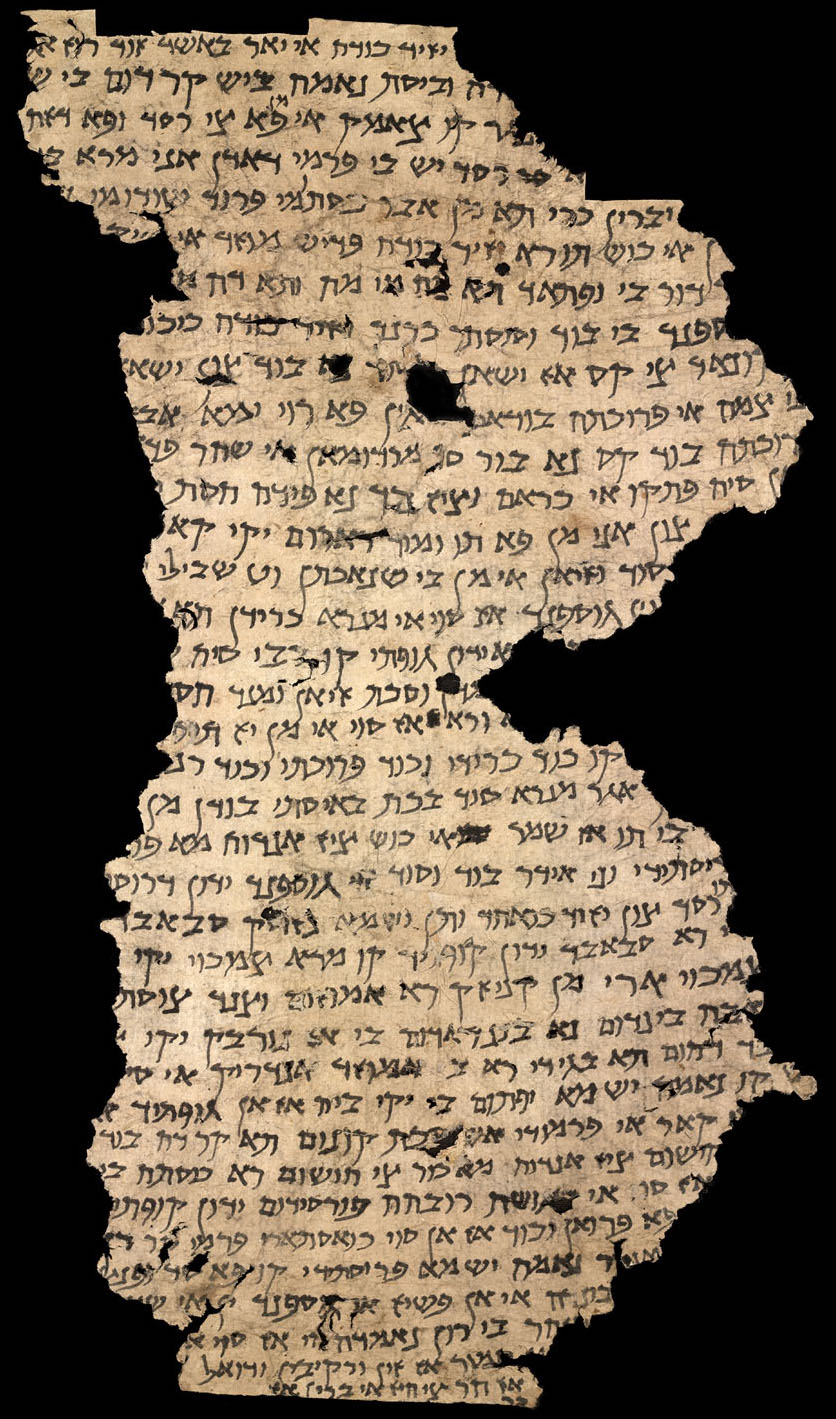
Dandan Uiliq Letter 1, ca. 800 (British Library Or.8212/166)

Introduction

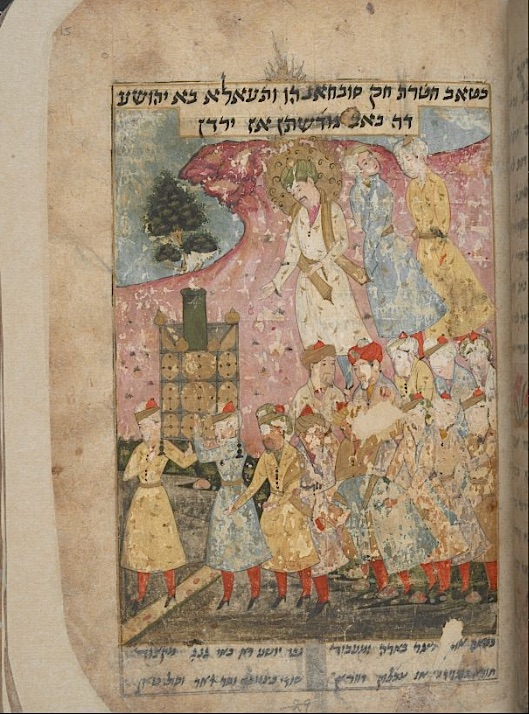
Joshua and the Israelites carrying the Ark of the Covenant, from the Fath Nama, Iran, 17th c. (British Library Or 13704, f. 15r)

Judeo-Persian is the term applied to the varieties of Persian that were employed as spoken and literary language by the Iranian Jews for more than a millennium.

Starting in the last centuries of the first millennium CE, members of the Persian-speaking Jewish communities (in Iran and Central Asia) began writing their letters, documents, and religious and literary texts in Hebrew script.

These Judeo-Persian texts offer invaluable insights for the evolution of New Persian in the earliest stages of its development.

Early Judeo-Persian texts include a wide variety of writings, from exegetical works (known as tafsīr), poetry, and religious/historical epics (composed from the 14th century onward), to legal documents and letters that detail daily life.

Linguistically, the attested Judeo-Persian texts are categorized into two main periods:


  • Early Judeo-Persian (EJP) – from around 800 CE to the 13th century (pre-Mongol era).
  • Late Judeo-Persian (JP) – from the 13th century to the early 20th century.

Late Judeo-Persian closely resembles standard Classical Persian, written in Arabic script, while Early Judeo-Persian represents a much earlier stage of Persian. This early form is rich in dialectal variations and archaisms, providing us with a rare glimpse into the Persian language’s evolution.

Course Description

This 8-week introductory course offers a foundation in Early Judeo-Persian (EJP), an early variety of New Persian crucial for understanding the evolution of New Persian.  Notably, the earliest datable New Persian documents — two letter pages from the late 8th century CE found at Dandan-Uiliq in northeast Xinjiang, were written in Early Judeo-Persian.

The course is structured in a way, as to help the participants simultaneously learn the language and its grammatical subtleties, as well as learning and practicing the Hebrew script used for writing the Judeo-Persian texts.

Class Structure

The course consists of 8 classes in total, with two-hour sessions held once a week on Saturdays. Below is a breakdown of the main activities during each class:

  • Discussion of questions: Reviewing the homework (20 minutes)
  • Reading and analysis: Close reading of selected texts with paleographical and philoloical commentary (40 minutes)
  • Break: Short pause to refresh (10 minutes)
  • Reading and analysis (40 minutes)
  • Q&A and wrap-up: Open discussion and addressing participants’ questions (10 minutes)

Students are encouraged to actively participate and share their perspectives, creating a collaborative learning environment.

By participating in this course, the participants will:

  • Learn to read EJP script and its orthographic conventions,
  • Study key EJP documents, including the original Dandan-Uiliq letters,
  • Explore the broader corpus of EJP and Judeo-Persian texts,
  • Engage with essential scholarly literature on EJP, and
  • Gain insights into the history and dialectology of Early New Persian.

Selected Texts for the Course

This course features key Early Judeo-Persian documents, coming from Dandan-Uiliq (north-east of Khotan, Xinjiang, PRC), and the Cairo Genizah, Egypt. The selected texts include commercial letters, legal documents, and a religious argument, providing insights into the linguistic condition of Early New Persian (ENP) as spoken by Jewish communities outside Khorasan, representing the Southern variety of ENP.


Main Manuscripts:

  • Du1 – Dandan Uiliq Letter 1, ca. 800 (Utas 1969)
  • Du2 – Dandan Uiliq Letter 2, ca. 800 (Zhang and Guang 2008)
  • Ar – Early Judeo-Persian Argument, 11th/12th century (MacKenzie 1968)
  • Lr – Law report from Ahwaz, dated 1021 (Asmussen 1965)

Participants will also examine additional texts, offering a foundation for further research and a broader understanding of EJP’s development.

Methodology

A key principle I rely on in my classes is the comparative method. 

To enhance our understanding of each text, I will draw comparisons across different stages and layers of Persian, including Old and Middle Persian, Manichaean, as well as Classical and Modern Persian, along with various Iranian dialects. These comparisons deepen our examination of the literary contexts surrounding the texts, illuminating the meanings of the words, expressions, and ideas within each text.

This methodology emphasizes the grammatical logic and linguistic structure of each one of the texts we will discuss. As a result, participants will not only understand the contents of the Jewish letters from Dandan Uiliq to the Cairo Genizah covered during the course but will also acquire the essential tools to read and interpret other Early Judeo-Persian texts independently.

Testimonials

Ruben was beyond exceptional as a tutor in Classical Persian, custom-designing and adapting to my interests and progress an invigorating course in its medieval historiography. He made every lesson enjoyable, and never failed to amaze with his encyclopedic knowledge of the Persian language, illuminating roots and derivations of any given word through the ages. Simply put, I could not have asked for a more inspiring and excellent teacher!
Alexander Sherborne
DPhil Student, Magdalen College, University of Oxford
I have taken both Shahnameh and Classical Persian Prose reading courses with Ruben, and all I can say is that he is the best language teacher I have had the pleasure of learning with. He has an extraordinary ability of introducing a wide range of topics like philology, history, and geography into his language teaching, and his encylopaedic knowledge of the Iranian world (and its languages) creates a learning experience that I can confidently say is unique to him and his school.
Rohan Kaya
Faculty of Asian and Middle Eastern Studies, University of Oxford
Thanks to his vast and deep familiarity with several religious, historical and literary texts written in Middle and Classical Persian, Ruben’s well-structured courses have always been intellectually stimulating and inspiring. In addition to his knowledge of secondary literature in Russian, French, German, Armenian, Persian and English, Ruben often draws on riches of the Persian literary canon to explain linguistic features. As an experienced language teacher and researcher in Iranian studies, his teaching style is an amalgam of historical linguistics and detailed philological analysis. Thanks to his helpfulness, modesty, flexibility and characteristic humor, his lessons are always engaging and entertaining. Over the years, we’ve worked together on several texts, and his intellectual impact on my own research has been truly transformative.

Kristof Szitar
PhD candidate, Université de Lausanne

FOLLOW US

CONTACT
Ruben S. Nikoghosyan (Yerevan, Armenia)

Email: nikoghosyanruben@gmail.com