Ferdowsi Summer School of Persianate Languages and Literatures
July 6 - July 31, 2026
Yerevan, Armenia
Location: Yerevan (Armenia)
Dates: July 6 – July 31
Duration: 4 weeks (80+ hours)
Days: Monday to Friday
Hours: 9AM – 2:30PM
Languages: Classical Persian; Urdu; Chaghatay
Instructors: Iskandar Ding (Chaghatay), Kristof Szitar (Urdu), Ruben Nikoghosyan (Classical Persian)
Instruction Language: English
Requirements: Lower intermediate/Intermediate level of Modern Persian
Deadline for Applications: April 15
Participation: In person
Participation Fee: 2400 USD (*2100 USD for applications before March 1)
Included in the Fee: tuition; study materials; banquet dinners; tours in the countryside.
Accomodation: Not included in the price
Payment: Bank Transfer, Cash
Additional Activities: workshops; lectures
*Background Photos: Gawhar-Shad Mausoleum, Herat, Afghanistan (by R. Nikoghosyan)
The Ferdowsi School of Persian Literature is delighted to invite you to its Summer School of Persianate Languages and Literatures, which will run from July 6 to July 31, in Yerevan, Armenia.
The Ferdowsi Summer School of Persianate Languages and Literatures is an intensive four-week programme designed as a comprehensive introduction to Classical Persian, Chaghatay and Urdu, the three main literary languages of the Persianate world, and their literatures.
Aimed at students and scholars who want to read primary sources in those languages closely and confidently, the program brings together rigorous language instruction, hands-on work with classical texts, and a shared intellectual atmosphere that extends well beyond the classroom. The classes are set in Yerevan — a crossroads of Persianate, Armenian, and wider Eurasian cultures.
The summer school combines serious philological training with lectures, workshops, and excursions that place language and literature firmly within their lived historical contexts.
Why Classical Persian, Chaghatay and Urdu?
Classical Persian, after attaining the status of the literary language in Eastern Iranian lands in 10th century, became the main administrative, literary, and political language of all the dynasties that followed and came to rule the vast areas of Central Asia, Iran, and the Indian subcontinent from the 11th century up until the 18th and 19th centuries. Thousands of literary, religious, and political texts were produced in this language, which are an enormously important resource for the study of the the history of Western, Central, and Southern Asia. To understand the history of these regions, one needs a fundamental familiarity with Classical Persian. The reason for treating it as a separate discipline from Modern Persian lies in its significant grammatical, lexical, and stylistic differences.
Following the Persian model, other regional languages, such as Chaghatay, the Turkic literary idiom of Central Asia, and Urdu, the South Asian literary idiom, rose to the level of standard literary languages in their respective regions. They produced a vast amount of important literature, extending the scope of the Persianate world to other language families. Despite belonging to different languages families and branches, there are fundamental similarities between Classical Persian and Chaghatay and Urdu, as the latter two were deeply influenced by Classical Persian in terms of syntax, vocabulary, and style.
To fully understand the histories of Iran, South Asia and Central Asia, it is of great benefit for any specialist in Persianate cultures and histories to be familiar with Classical Persian as well as Chaghatay and Urdu. To fill this gap and provide a harmonized, thorough structure across all three languages, we have designed this summer school so that participants will study Classical Persian while also building their knowledge of Chaghatay and Urdu.
The Structure of the Summer School
During the four weeks of the summer school, we will teach the three languages — Classical Persian, Chaghatay, and Urdu — simultaneously. Classical Persian instruction will begin with an introduction to the fundamentals of the grammar. Following that we will be delving into classical texts from earlier periods and gradually exploring the grammatical, lexical, and stylistic peculiarities of the language through guided readings. This will include drawing parallels to Modern Persian, as well as Middle and Old Persian. We will also engage in manuscript readings to provide a comprehensive introduction to Classical Persian.
For Chaghatay and Urdu, the courses are designed as complete beginner introductions, so no prior knowledge is required. In the first two weeks, we will lay the foundations of grammar for both Chaghatay and Urdu, while participants begin practicing reading texts. At the same time, we will introduce scholarly literature, texts, and the literary history relevant to each language.
At first sight, it might seem like an overwhelming task to study three languages at the same time. However, it is important to keep in mind that Chaghatay and Urdu are largely based on the model of Classical Persian, and a significant portion of their lexicon is derived from there. Thus, the courses for Chaghatay and Urdu can be seen as a transition from C. Persian to these languages, making the introduction of their respective grammars a very manageable process.
Requirements
Participants are expected to have a lower intermediary to advanced knowledge of Modern Persian. For Chaghatay and Urdu no prior familiarity with the languages is required, as they will be introduced from zero, and a thorough introduction to their respective grammars will be provided.
Location
The summer school will take place in Yerevan, an ancient crossroads of cultures and civilizations, which for centuries have been a part of the northwestern Persianate cultural realm. This will give the participants the cherished opportunity to explore the historically rich and multicultural areas of the South Caucasus from a convenient location, and enjoy the vibrant summertime Yerevan!
Yerevan’s strategic location allows for enriching excursions into various regions of Armenia, including the neighbouring Georgia, offering participants a deeper understanding of Armenian cultural connections to the wider Persianate world.
Apart from the classroom activities, the Summer School participants will also enjoy the unique hospitality of the Armenian capital through welcome and farewell banquets, accompanied by traditional food and musical performances.
The in-person format of the summer school will foster a direct interaction and collaboration among participants, instructors, and fellow scholars, creating a vibrant academic community and enriching the overall experience.
Accommodation is not included in the course fee. Participants are therefore advised to arrange their stay independently, for example via Airbnb. Upon request, we are happy to offer guidance on suitable locations and provide further practical recommendations.
A typical day
The participants are expected to participate in all three classes, which will run from Monday to Friday. There will be two language classes each day, the number of the classes for each week totalling 10 classes ( = 20 hours): 4 Classical Persian, 3 Chaghatay and 3 Urdu.
The classes will start in the morning, at 9AM. The first class (usually Classical Persian) will run until 11:15AM, with a 15 minute coffee break at 10AM. There will be a lunch break from 11:15AM until 12:15PM, when the second class will start (Chaghatay or Urdu), and will run until 2:30PM, with a 15 minute coffee break at 1:15PM.
9:00AM – First Class
10:00AM – Coffee Break
10:15AM – First Class
11:15AM – 12:15PM – Lunch Break
12:15PM – Second Class
1:15PM – Coffee Break
2:30PM – End of the Second Class
Here are the classes according to the days:
Monday – 1. Classical Persian; 2. Chaghatay
Tuesday – 1. Classical Persian; 2. Urdu
Wednesday – 1. Classical Persian; 2. Chaghatay
Thursday – 1. Urdu; 2. Chaghatay
Friday – 1. Classical Persian; 2. Summary/Q&A/Cultural Event
In addition to language instruction, the program includes seminars, lectures, and workshops on Persianate cultures and literatures, covering topics such as literary history, manuscript studies, and the evolution of writing systems. The workshops will take place in the evenings. They will feature talks on a variety of subjects delivered by the instructors as well as guest lecturers.
By the end of the program, participants will possess a comprehensive and nuanced understanding of the Persianate literary traditions, enabling them to engage independently with texts in all three languages.
What would you get from the course?
By taking the course, you would:
• Strengthen advanced reading competence in Classical Persian and develop fundamental familiarity with Chaghatay and Urdu for cross-regional research.
• Acquire hands-on experience with primary texts, enhancing philological precision, grammatical analysis, and interpretive methodology.
• Develop a comparative Persianate framework applicable to research on Iran, Central Asia, South Asia, and the Caucasus.
• Engage in intensive, small-group instruction allowing close scholarly exchange and individualized feedback.
• Situate texts within broader historical, intellectual, and cultural contexts through seminars and guest lectures.
• Build international academic networks with fellow graduate students and scholars working in related fields.
• Enhance preparation for doctoral research, archival work, and manuscript-based projects.
• Receive a certificate of participation documenting advanced academic training.
Have a question? ask us
Instructors
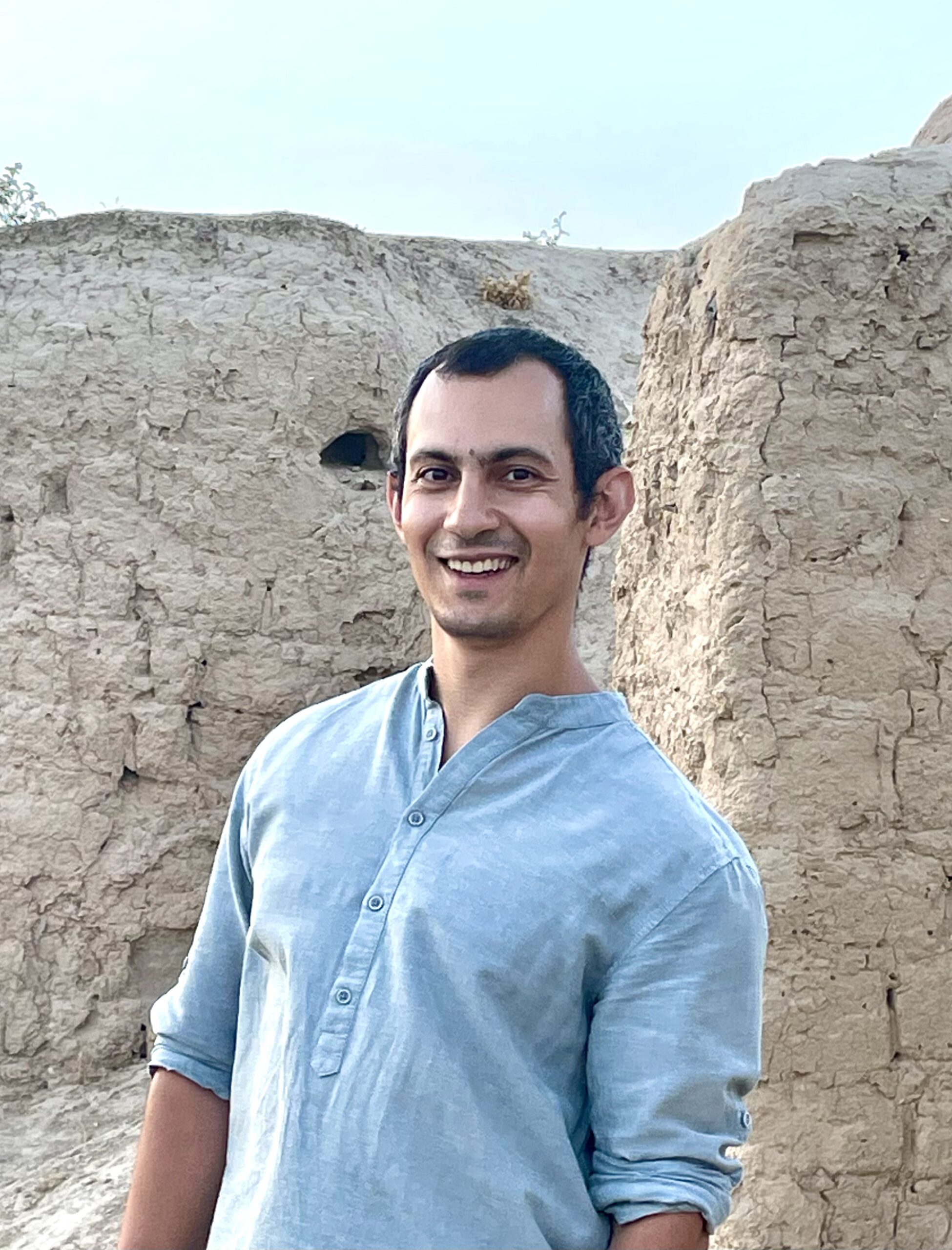
ISKANDAR DING holds a BA in Modern Languages and Linguistics from the University of Oxford, an MA in Iranian Studies from SOAS University of London, and has just completed his PhD at SOAS, focusing on diachronic and synchronic topics of Yaghnobi verbal morphosyntax.
Iskandar’s research lies at the intersection of historical linguistics, language contact, and cultural transmission across the eastern Persianate world and adjacent regions.
He has organised Chaghatay reading groups at SOAS where he taught the literary language not only with classical texts, but also reading skills in modern Uzbek and Uyghur
Beyond his academic research, Iskandar engages with broader linguistic and cultural conversations through writing and public scholarship.
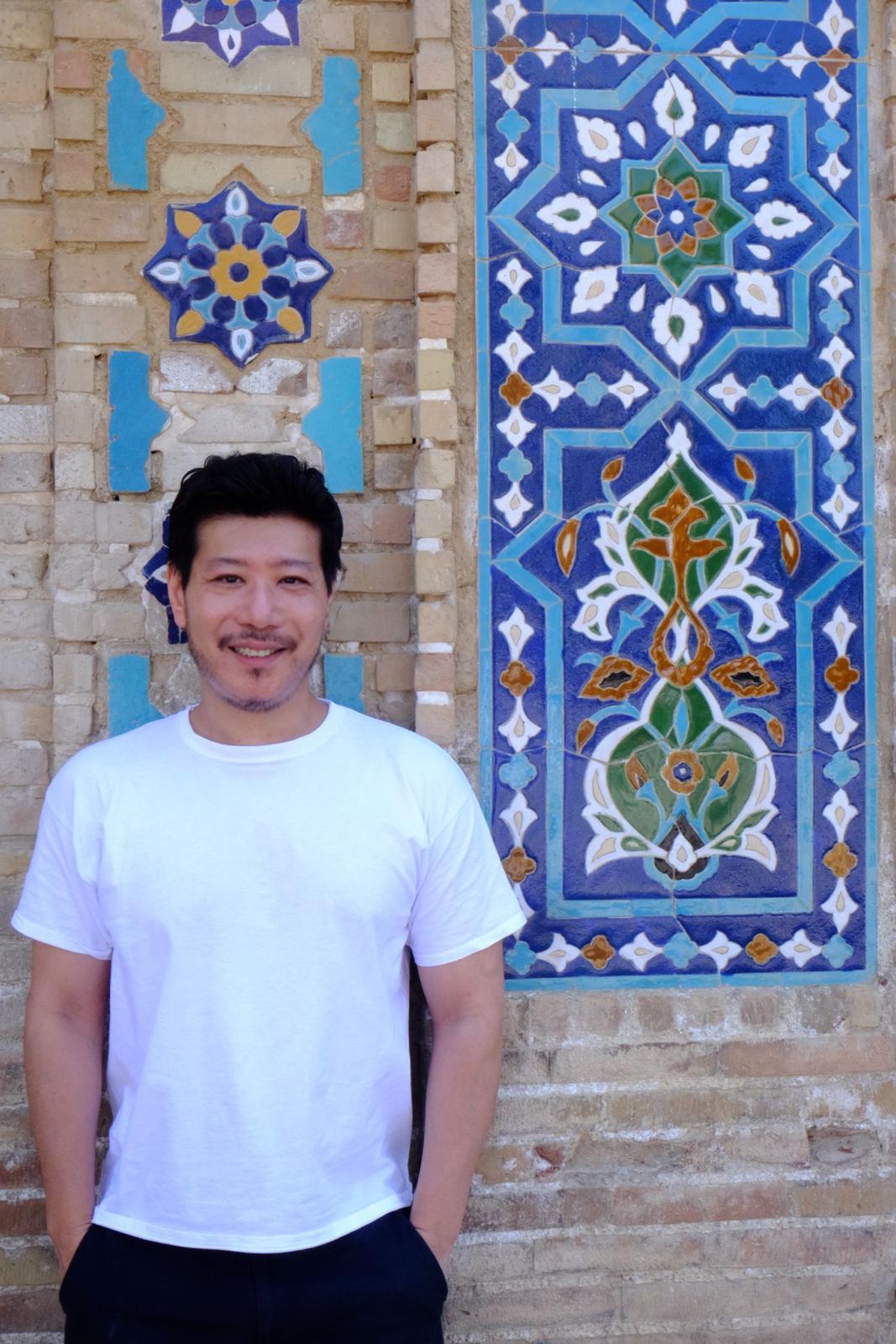
KRISTOF SZITAR is a researcher and translator of Urdu and Persianate literatures, currently completing his PhD at the University of Lausanne, where he studies Persian poetry of the Ghaznavid period and its multilingual afterlife across South and Central Asia, the Iranian plateau, and the Caucasus. He previously served as Visiting Assistant in Research at Yale University, and in 2024 was the Urdu preceptor at Heidelberg University’s Summer Program.
At the heart of his work is Urdu as a cosmopolitan literary language shaped by Persian, Arabic, Turkic, and Indic traditions. He is especially interested in how Urdu grows out of the wider Persianate and Turkic literary worlds—through figures such as Amīr Khusraw and Amīr ʿAlī Shīr Navāʾī—and how it is later transformed by poets like Mīrzā Ghālib. In both teaching and translation, he approaches Urdu as a living archive of cultural encounter.
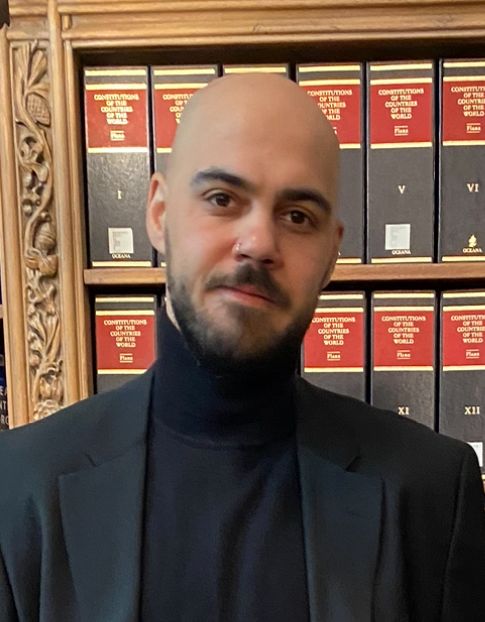
RUBEN NIKOGHOSYAN is an independent scholar of Iranian studies and the founder and director of the Ferdowsi School of Persian Literature. His research focuses on Persian language and literary traditions across periods, including Middle Iranian philology, Early Classical Persian prose, and the role of Persian literary culture from antiquity through the medieval era. He works on the continuity between ancient and Classical Persian literary forms and actively engages with textual witnesses that illuminate linguistic history and cultural exchange. One of his current research projects involves the editing and analysis of some Early Judeo-Persian letters and texts from the Bamiyan Papers, medieval documents written in Hebrew script that shed light on Jewish communities and Persian linguistic practice in the eastern Islamic world.
Languages
The Classical Persian programme (taught by R. Nikoghosyan) is designed for students at a lower-intermediate to advanced level of Persian who wish to deepen their understanding of Classical Persian grammar, style, and the ability to read Classical Persian texts with a full appreciation of its historical and literary evolution. This course offers a comprehensive introduction to those aiming to work with Classical Persian texts at an academic level, equipping participants with all the necessary philological and linguistic tools for independent research after completion.
Over the course of four weeks, the participants will explore texts of varying difficulty, origins, and historical periods.
In the first week, we will introduce early Classical Persian prose through texts such as the Shahname of Abū Mansūr and Bal’ami’s translation of Tabari’s history, providing a foundational familiarity with Classical Persian grammar.
In the second week, we will focus on 11th-century authors, such as Ferdowsi and Manuchehri Damghani, examining selections from the Shahname and selected qașīdas to understand the literary styles and trends in Classical Persian poetry.
The third week will introduce more complex texts, such as the Kalila and Dimna translated by Nasrallah Munshi and the Taẓkirāt-ul-šuʻārā by Dowlatshah Samarqandi, with a particular focus on reading Persian manuscripts and understanding their stylistic and grammatical nuances.
In the fourth week, we will study one of the impactful female poets, Mahsati Ganjavi (12th c.), alongside selections from the Dīvān-e Šams-e Tabrīzī of the great sufi Mowlana Jalal ed-Din Balkhi (Rumi).
After the completion of the course the participants will be able to confidently work with and research a wide range of literary Classical Persian texts, both in printed and manuscript versions.
The Urdu programme (taught by K. Szitar) is designed to develop a reading proficiency in Urdu through close engagement with original literary texts from the Persianate world.
The primary focus is on strengthening grammatical competence and reading strategies, allowing students with prior knowledge of Persian to approach Urdu texts with confidence and accuracy. Grammatical structures are introduced systematically with particular attention to features shared with Persian as well as points of divergence.
Rather than treating Urdu as an isolated language, the course emphasizes its historical formation through sustained contact with Persian, Chaghatay, and other Persianate languages of Central and South Asia. Urdu prose and poetry are approached as part of a transregional continuum linking Central Asia, Iran, North India, the Deccan, the Caucasus, and the Ottoman world. Readings span multiple periods and genres of Urdu literary history.
The course begins with excerpts from the Urdu translation of the Baburnama, using this text to introduce core grammatical foundations while highlighting Chaghatay–Persian–Urdu continuities in early modern prose culture. Later weeks focus increasingly on poetry, including early Dakhani verse, classical authors from Delhi and North India, and selected modern poetic texts. Students are introduced to major poetic forms such as the ghazal, rubāʿī, and qașīda, as well as the influence of Persian and Arabic on Urdu vocabulary and literary expression.
The Chaghatay programme (taught by I. Ding) of the Summer School of Persianate Literature has two main goals – to enable the participants with knowledge of Persian and/or Urdu at or above lower-intermediate level to draw on their language skills to read and understand Classical Chaghatay poetry and prose, and to develop an appreciation for the literary tradition understood as ‘Persianate’ shared across communities who speak and/or write in Persian, Turki, and Urdu. Although not the focus of this programme, manuscripts are provided whenever available for practice. The programme also familiarises the participants with different transliteration conventions used in modern editions of Chaghatay texts to facilitate their future research. Additionally, the participants have an opportunity to learn how to convert their Chaghatay reading skills to the study of the two standardised modern reflexes of Chaghatay – Uzbek and Uyghur.
With solid linguistic skills acquired from the course, the participants may look forward to exploring Chaghatay literature beyond the focused literary corpus of this programme as confident independent readers.
Join the Ferdowsi Summer School
Testimonials
PS. Hoping that the School comes up with in-person Summer/Winter School where we can travel, read and learn together :)