Central Asia through Persian Historical Texts: An Introduction
March 12 - May 14, 2026
Online, Weekly
Instructor: Ruben S. Nikoghosyan
Languages: English, Persian
Duration: 12 weeks (24 hours)
Frequency: 1 class per week (Thursday)
Duration of each Class: 2 hours (7:00 pm Yerevan Time)
Participation Fee: 350 USD
Deadline for Applications: March 5
Location: Online (Zoom)
Level of Persian: Intermediate, Advanced
Texts:
- Iṣṭakhrī, Mamālik wa Masālik (Cl. Persian translation, 13/14th c.);
- Tārīkh-i Bukhārā, by Abū Bakr Muḥammad b. Jaʻfar Naršakhī.
- Juwaynī, Tārīkh-i Jahāngušāy (13th c.);
- Šaraf-ud-dīn ‘Alī Yazdī, Zafar-nāma (15th c.);
- Mīrzā Muḥammad Haidar Dūghlāt, Tārīkh-ī Rašīdī (16th c.);
- Faẓlullāh b. Rōzbihān Khunji, Mihmān-nāma-yī Bukhārā.
Registration: To apply, please click the “Apply” button above. Complete all required fields and submit. Accepted applicants will receive further instructions on participation.
Note: All materials will be provided by the instructor
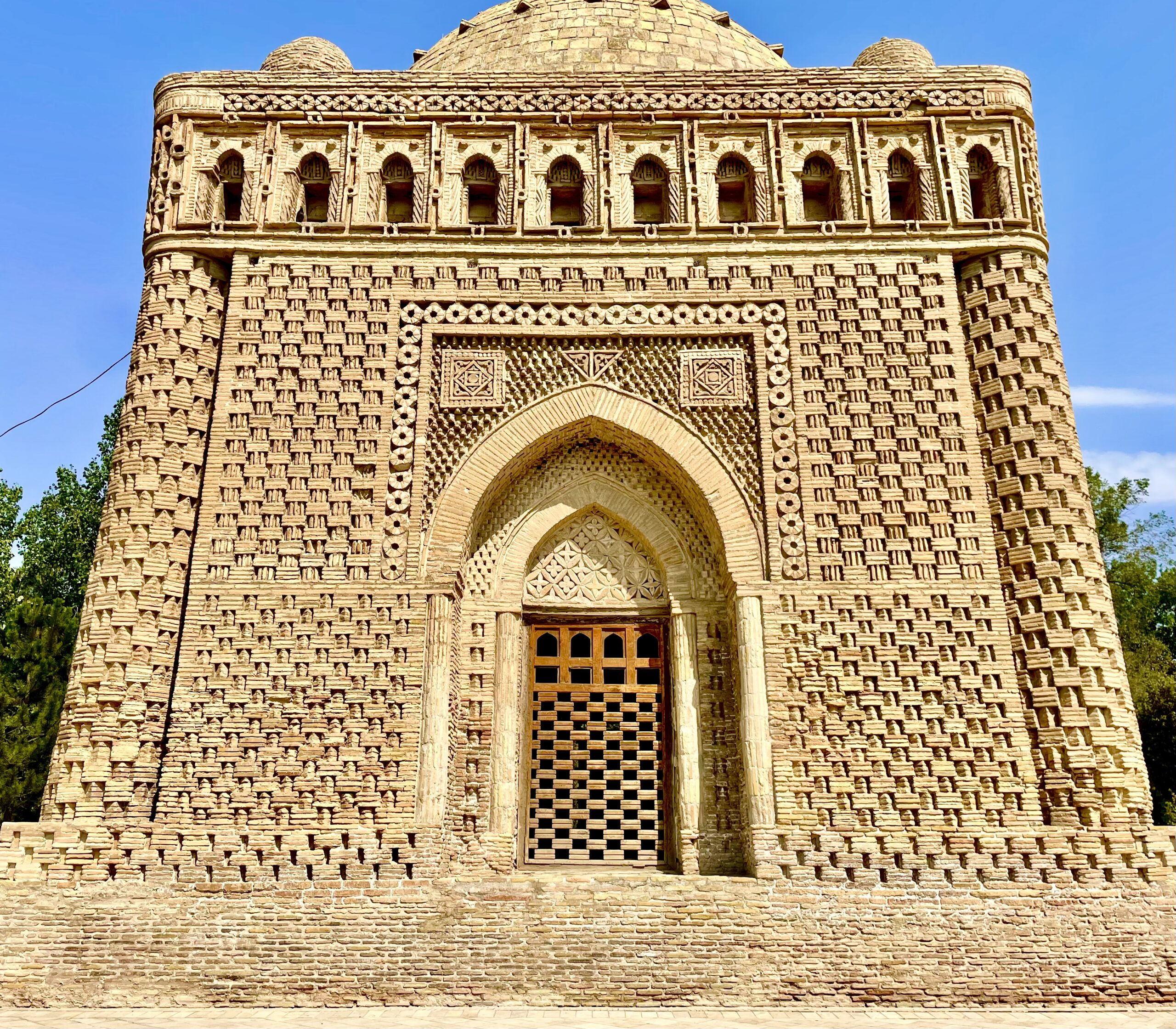
Persian Historical Texts on Central Asia
Persian historical texts are of fundamental importance for the study of Central Asia. Following the Islamic conquest in the early eighth century, Persian spread rapidly throughout the region known as (known to the Arabs as Māwarāʾan-nahr “[the land] beyond the river”), gradually absorbing and superseding many local languages. Over the course of the following millennium, Persian was the principal language of administration, literature, and scholarship across Central Asia and remained the most important medium for recording political, cultural, and intellectual life. This position was only seriously challenged in the twentieth century, when Soviet nation-building policies deliberately undermined the role of Persian as a literary and administrative language in the predominantly Turkic-speaking republics.
The historical legacy of Persian in Central Asia is vast: hundreds, if not thousands of chronicles, biographical and hagiographical compositions, geographical treatises, and mirrors for princes were composed in Classical Persian, alongside an incalculable amount of documentary texts, many of which remain insufficiently studied or entirely unexplored. For this reason, Persian is indispensable not only for the study of Islamic-period Central Asia, but also for understanding earlier periods through later historical memory and historiography. Any serious engagement with the history of Central Asia prior to the twentieth century therefore requires a solid grounding in Classical Persian.
About the Course
The current course aims to provide students with the linguistic and historical tools necessary to approach Classical Persian sources directly and critically. Over the course of 12 weeks (24 hours), we will meet once a week on Thursdays (6pm Yerevan). During this time, we will read and analyze six classical Persian texts, each illuminating different facets of Central Asian geography and history across various periods spanning from 10th until 16th centuries.
The course has two main goals. First, it aims to develop a deep understanding of the grammatical and stylistic aspects of Classical Persian. Through careful historical-linguistic analysis, students will gain insight into the language used in historical texts, which is crucial for rigorous historiographical research. In other words, mastering the language is essential for accurate historical interpretation.
The second goal is to place these texts within their broader historiographical context. We will explore how these works reflect in their the unique way the historical developments in Central Asia, allowing for a more comprehensive understanding of the region’s history and historiography.
Selected Texts
1. Mamālik wa Masālik, by Abū Isḥaq Ibrāhīm Iṣṭakhrī, translation of Muḥammad b. Asʻad b. ʻAbd-ullāh Tustarī (late 13th/early 14th c.)
Chapter: Māwara’n-nahr, pp. pp. 307-395
Text Edition: Abū Esḥaq Ebrāhīm Eṣṭakhrī. Mamālek va Masālek, tarjome-ye Moḥammad b. Asʻad b. ʻAbd-ollāh Tostarī. Be kušeš-e Iraj-e Afšār. Majmu’e-ye entešārāt-e adabi va tārīkhī-ye mouqufāt-e doktor Mahmūd-e Afšār-e Yazdī. Tehran 1373/1994.
2. Tārīkh-i Bukhārā, by Abū Bakr Muḥammad b. Jaʻfar Naršakhī.
Chapter: 1. Ẓikr-i bidāyat-i wilāyat-i āl-i Sāmān, pp. 90-94; 2. Ẓikr-i dar āmadan-i amīr Isma’īl ba Bukhārā, pp. 94-111.
Text Edition: Abū Bakr Moḥammad b. Ja’far an-Naršakhī, Tārīkh-e Bokhārā, edited by Modarres-e
Razavi, Tehran, 1387Š/2008.
3. Tārīkh-i Jahāngušāy, by ‘Alā-ud-dīn ‘Aṭā-Malik Juwaynī (13th c.)
Chapter: Ẓikr-i Istikhlāṣ-i Bukhārā, pp. 75-85.
Text Edition: The Tārīkh-i Jahān-gushā of ‘Alāuʼd-dīn ‘Aṭā-Malik-i Juwaynī. Part I. By Mīrzā Muhammad Ibn ‘Abdu’l-Wahhāb-i-Qazwīnī. Leiden & London. 1912.
4. Zafar-nāma by Šaraf-ud-dīn ‘Alī Yazdī
Chapters: 1. Guftār dar nihẓat-i Sāhib-qirān ba Mawarā’nnahr wa šikastan-i laškar-i Amīr Husain (pp.152-157); 2. Guftār dar tawajjuh-i Sāḥib-qirān ba jānib-i Samarqand.
Text Edition: Maulānā Sharafuddīn ‘Alī of Yazd. The Ẓafarnāmah. Volume I. Edited by Muḥammad Ilāhdād. Calcutta: Baptist Mishin Prīs, 1887.
5. Tārīkh-ī Rašīdī, by Mīrzā Muḥammad Haidar Dūghlāt (16th c.)
Chapter: Guftār dar julūs-i Babur pādišāh da mamālik-i Māwara’n-nahr, pp. 374-378
Text Edition: Mīrzā Moḥammad Heidar Dūghlāt, Tārīkh-e Rāšīdī. Taṣḥīḥ-e Doktor ‘Abbāsqolī Ghaffārīfard. Mīrās-e Maktūb. Tehrān, 1383/2004.
6. Mihmān-nāma-yī Bukhārā (Hisory of the Reign of Muhammad Šaybānī), by Faẓlullāh b. Rōzbihān Khunji (1509AD)
Chapter: 1. Ẓikr-i umūr-i ki dāʻī šud bi-ghazā-yi Qazzāq, pp. 41-45; 2. Ẓikr-i tawajjuh-i haẓrat Khalifat-ar-Raḥman bi-ṣawb-i diyār-i Qazzāq, pp. 167-169
Text Edition: Mehmānnāme-ye Bokhārā, ta’līf-e Faẓlollāh b. Ruzbehān-e Khonji. Be ehtemām-e doktor Manučehr-e Sotude. Tehrān, 2535Š/1976.
Course Structure
The course consists of 12 sessions of intensive study, each session lasting for two hours. The classes will be held once a week, on Thursdays and will last for 12 weeks. Below is a breakdown of the main activities during each class:
–
Discussion of questions: Reviewing and reflecting on homework sections
Reading and analysis: Close reading and analysis of selected texts
Break: Short pause to refresh (15 minutes)
Reading and analysis: Continuing reading the text
Q&A and wrap-up: Open discussion and addressing participants’ questions
–
Students are encouraged to actively participate and share their perspectives, creating a collaborative learning environment.
Methodology
In my courses, I employ a straightforward yet highly effective method that integrates literary, historical-linguistic, and philological approaches to elucidate even the most complex passages and challenging words within Classical Persian texts.
Drawing on my background in pre-Islamic (Middle) Persian language and literature, as well as my familiarity with a number of Iranian and non-Iranian languages, broader historical and geographical contexts, and the rich literary traditions of the region, I aim to bring clarity to the meanings of words, expressions, and ideas within the texts we study.
This approach, which focuses on explaining the foundational logic and structure of the prose, will not only help participants comprehend the historical works examined during the course but also provide them with the tools and confidence to engage with other Classical Persian texts independently in the future.
Testimonials
PS. Hoping that the School comes up with in-person Summer/Winter School where we can travel, read and learn together :)