Advanced Middle Persian: Pahlavi Texts in Pahlavi Script (Weekly)

January 24 - March 14
2026

Instructor: Ruben S. Nikoghosyan

Dates: January 24 – March 14

Duration: 8 Weeks (16 hours)

Frequency: 1 day per week (Saturday)

Classes start at: 6:30 pm (Yerevan Time) 

Class Duration: 2 hours (with a 15-minute break) 

Language of Instruction: English 

Location: Online (Zoom classroom)

Deadline for Applications: January 16

Participation Fee: 280 USD

Course Texts*:

  • Kārnāmag ī Ardaxšēr ī Pābagān (The Book of Deeds of Ardashir son of Pabak)

Registration: To register, click on the “Apply” button, fill in all the required fields, and click “Submit.” We will contact you upon acceptance and provide further instructions.

*Note: All materials will be provided by the instructor.


Requirements: Previous participation in one of the Introductory Pahlavi Courses with the instructor.

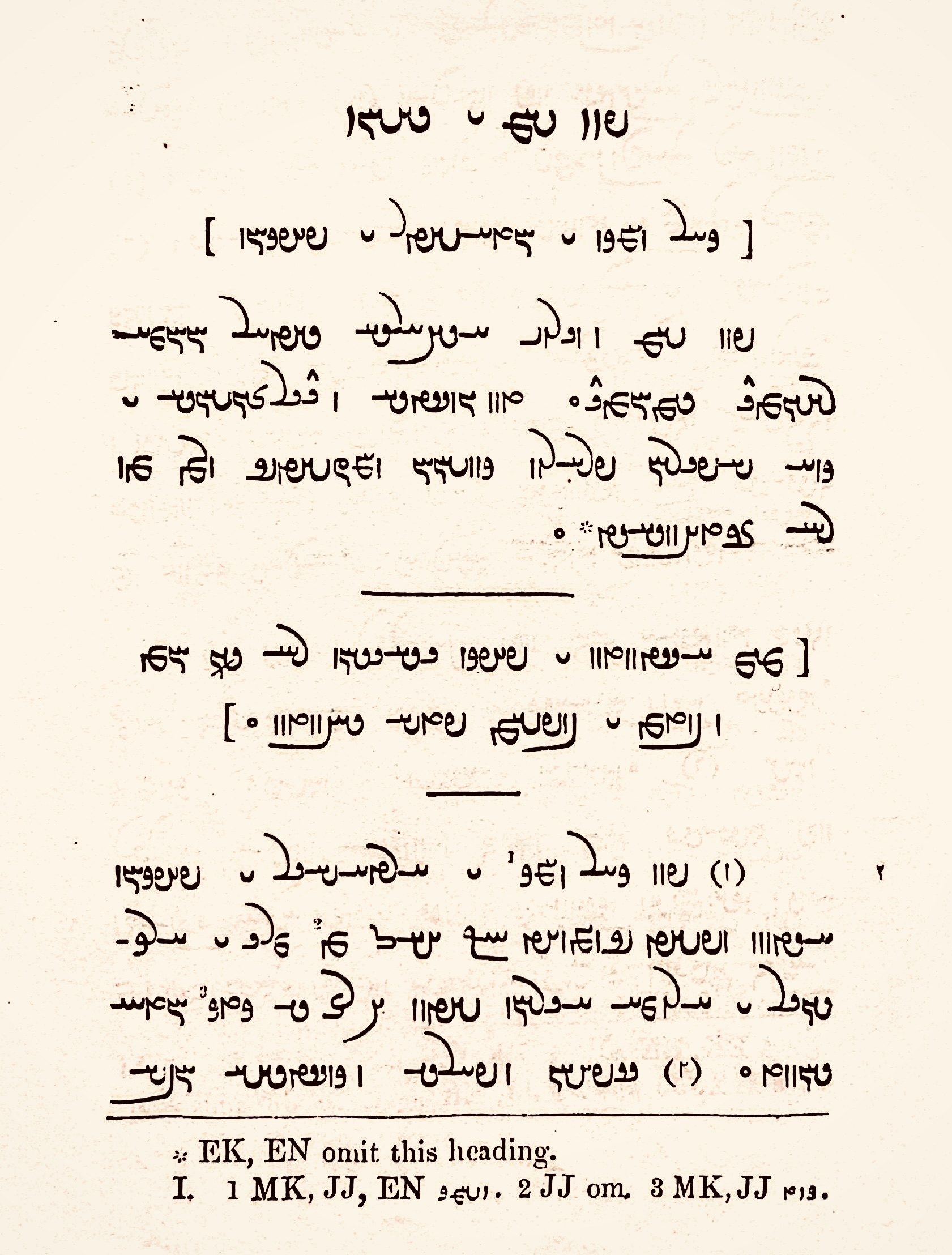
The first page of the critical edition of the Kārnāmag by E.K. Antia. Bombay 1900.
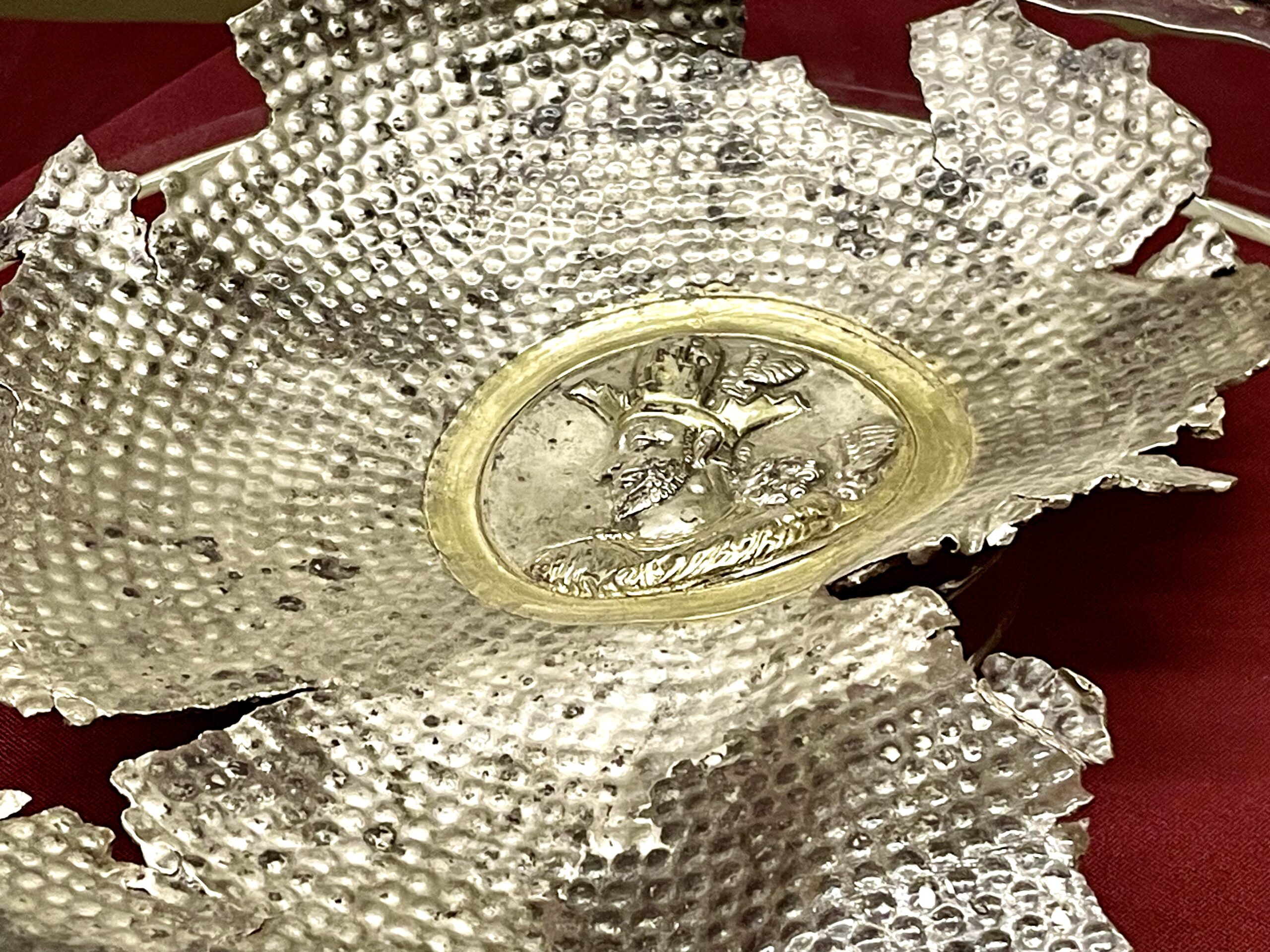
A Sasanian Silver Plate, probably 4th c. AD. Kabul National Museum, Afghanistan.

Course Summary

This eight-week advanced Middle Persian course is designed as an organic continuation of theIntroduction to Pahlavi: Online Winter School of Zoroastrian Middle Persian” introductory course. Thus the applications are open for only those students who have previously completed one of the introductory Middle Persian courses

As the continuation of the previous courses, this class will introduce participants to the original script in which Zoroastrian Pahlavi texts are written, known as the Book Pahlavi script, which derives from the Imperial Aramaic script. This script is considered one of the most complex among the alphabetical scripts, and it can be overwhelming to tackle on one’s own. This course will bridge that gap, providing all the necessary tools to master the script and lay a solid foundation for further study.

About the Course

The classes will take place once a week, over eight weeks, on Saturdays at 6:30 pm Yerevan time. Each session will last two hours, with a 15-minute break.

All readings will be conducted in Book Pahlavi script, with sources and techniques for approaching Pahlavi texts introduced along the way. The instructor’s goal will be to provide clear guidance through the complex lexical, orthographical, and grammatical nuances of the material, making the reading process as accessible as possible.

Any Middle Persian grammar that participants may have forgotten will be reviewed during the course, so prior gaps in knowledge will not be an obstacle.

The main text for this class will be the Kārnāmag ī Ardaxšēr ī Pābagān. Should the course continue for another round, a new text may be chosen for study.


Important Note: In case you have any specific questions pertaining to the course, feel welcome to contact me directly.

Testimonials

I took part in the Pahlavi Summer School course. During the three week span of the course we not only learned the basis of Middle Persian Grammar and inscriptional Pahlavi script, but also delved into various texts. We have read passagesd from famous religious scripture of Bundahišn and Arda-Wiraz Namak, famed Karnamag but also more obsure texts, such as Wizārišn ī čatrang. One of my favorite parts of the course was the ability to learn Pahlavi script and using it to decipher ancient inscriptions. Thanks to this I have learned what was Šābuhr ī Sagānšāh doing in Persepolis 1713 years ago :)
Piotr Szustakiewicz
PhD Student, University of Warsaw, Poland
I took Ruben’s ‘Introduction to Pahlavi’ course, and I highly recommend it. The course is well-structured and progresses quickly , keeping you engaged. Ruben’s extensive philological knowledge and historical expertise make the classes both insightful and enjoyable. This course is not just an excellent introduction to the Middle Persian language, but also a gateway to understanding the broader historical and cultural realities of Sasanian Iran. You will learn a lot — and have great fun in the process!
Ekaterina Nechaeva
Researcher at Université de Lille, France
This course greatly developed my confidence in Middle Persian, which I had tried to learn sporadically in years past, without much success. Our regular reading of Middle Persian texts helped us get into the habit of recognizing patterns in syntax, grammar, and vocabulary, and helped develop a fluency in reading and translating. We read different texts in different genres, and became familiar with the process of transliterating and transcribing inscriptions written in Middle Persian, which is very important for my future projects. Ruben's course will serve as the basis for all my future studies into Middle Persian!
Jae Hee Han
Assistant Professor, Department of Religious Studies, Brown University, USA
Thanks to his vast and deep familiarity with several religious, historical and literary texts written in Middle and Classical Persian, Ruben’s well-structured courses have always been intellectually stimulating and inspiring. In addition to his knowledge of secondary literature in Russian, French, German, Armenian, Persian and English, Ruben often draws on riches of the Persian literary canon to explain linguistic features. As an experienced language teacher and researcher in Iranian studies, his teaching style is an amalgam of historical linguistics and detailed philological analysis. Thanks to his helpfulness, modesty, flexibility and characteristic humor, his lessons are always engaging and entertaining. Over the years, we’ve worked together on several texts, and his intellectual impact on my own research has been truly transformative.

Kristof Szitar
PhD candidate, Université de Lausanne
I truly cannot recommend studying with Ruben Nikoghosyan enough to anyone interested in Persian languages and literature. He is a passionate scholar with a wealth of knowledge and critical insights into the literary traditions of Middle and classical Persian texts. I have taken Ruben’s Middle Persian and Shahnameh courses and have thoroughly enjoyed and developed my understanding of these texts. What I enjoy most from Ruben’s teaching style is ability to always answer questions in depth and provide students with up-to-date literature. No question is too small or too large! The Middle Persian course that I studied with Ruben provided me with a working grasp of Middle Persian, especially the ability to translate key texts of the Sasanian period and understand them in context. Ruben is extremely knowledgeable in both Middle and Classical Persian and positioned each text in its appropriate linguistic and cultural context, making it both more enjoyable and easier to comprehend. I personally found the linguistic links to Modern Persian, Parthian and Armenian very enjoyable. Similarly, the Shahnameh course is a wonderful introduction to the magic of Ferdowsi. I highly recommend it to any lover of Persian literature. Each section of the text is contextualised in class and the focus is on developing not just our reading, but understanding the linguistic and cultural framework of classical Persian.
Natasha Parnian
PhD Candidate, Department of History and Archaeology, Macquarie University, Australia

FOLLOW US

CONTACT
Ruben S. Nikoghosyan (Yerevan, Armenia)

Email: nikoghosyanruben@gmail.com