Introduction to Academic Persian: How to Read Scholarly Literature in Persian

October 9 - November 27, 2026

Instructor: Ruben S. Nikoghosyan

Instruction Language: Persian, English

Duration: 8 weeks (16 hours of instruction)

Frequency: 1 class per week (Friday)

Duration of a Session: 2 hours (6pm Yerevan Time)

Deadline for Applications: Octorber 1

Course Duration: October 9 – November 27 

Location: Online (Zoom)

Required level of Persian: Intermediate

Participation Fee: 320 USD

Payment Method: Bank Transfer, Paypal (+5%)

Registration: To apply, please click the “Apply” button above. Fill in all required fields and submit. Accepted applicants will receive further instructions on participation.

Note: All materials will be provided by the instructor

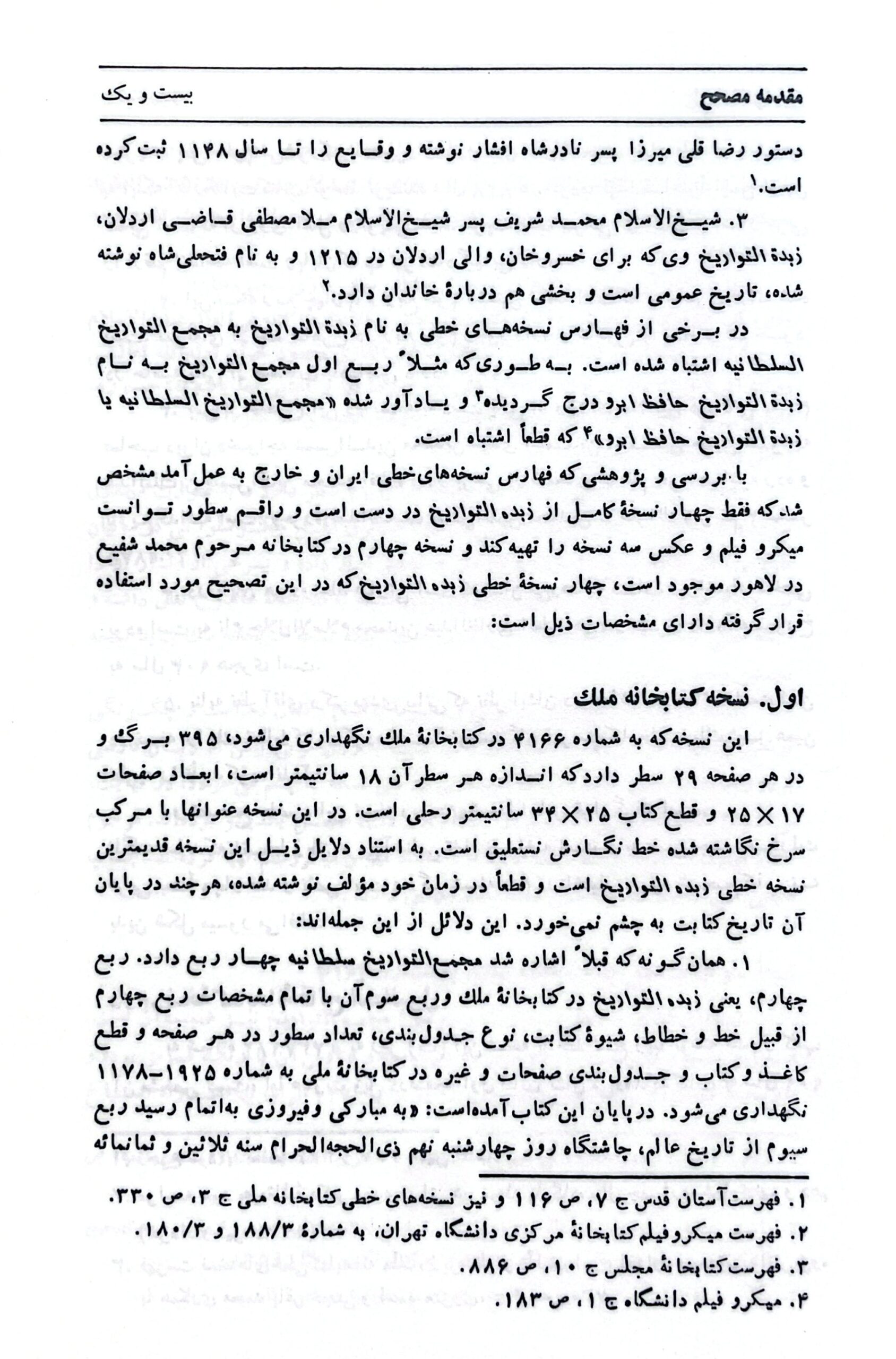
A page from the introduction of S.K. Hāj Seyyed-Javādī's critical edition of Hāfiz-i Abru's Zubdat al-tavārīx

Introduction to Academic Persian is an eight-week course designed as an introduction to the language of academic publications in Persian, with a particular focus on historical, philological, and literary studies.

The course is structured to introduce participants simultaneously to the language and terminology commonly encountered in Persian academic publications and to the scholarly literature in which this language is used. Through readings from the works of prominent Iranian scholars — particularly scholars who have published critical editions of important texts and whose research has made significant contributions to Iranian studies — participants will become familiar with a body of scholarship that is highly valuable for anyone working in the field.

Aims of the course

An important goal of the course is to help bridge the gap between Western and Iranian academia. Western  students of Iranian studies are often unfamiliar with the scholarship being produced in Iran, despite the fact that Iranian scholars have published a substantial body of important research, including critical editions, studies, and other works that are essential for research in the field.

Through guided and practical reading of academic texts, the course will help participants become more comfortable with Persian scholarly prose, expand their academic vocabulary, and develop the skills necessary to read Persian-language research more independently. At the same time, the course will introduce participants to some of the major scholarly figures and publications of contemporary Iranian academia.

Assignments and Practice

An important part of the course will consist of practical assignments based on a variety of Persian academic texts. These will include scholarly articles, introductions to critical editions, and other forms of academic writing, as well as readings introducing participants to the biographies and scholarly contributions of important figures in Persian literary and Iranian studies. The course will also introduce participants to important digital resources for locating and accessing Persian scholarly publications and editions.

All of the materials covered during the course will be provided to participants. In particular, a substantial number of digital copies of scholarly editions of Classical Persian texts will be made available for further reading and study. The aim is not only to help participants develop the ability to read Persian academic prose, but also to provide them with a practical collection of resources that they can continue to use in their own research.

Testimonials

I have taken both Shahnameh and Classical Persian Prose reading courses with Ruben, and all I can say is that he is the best language teacher I have had the pleasure of learning with. He has an extraordinary ability of introducing a wide range of topics like philology, history, and geography into his language teaching, and his encylopaedic knowledge of the Iranian world (and its languages) creates a learning experience that I can confidently say is unique to him and his school.
Rohan Kaya
Faculty of Asian and Middle Eastern Studies, University of Oxford
Thanks to his vast and deep familiarity with several religious, historical and literary texts written in Middle and Classical Persian, Ruben’s well-structured courses have always been intellectually stimulating and inspiring. In addition to his knowledge of secondary literature in Russian, French, German, Armenian, Persian and English, Ruben often draws on riches of the Persian literary canon to explain linguistic features. As an experienced language teacher and researcher in Iranian studies, his teaching style is an amalgam of historical linguistics and detailed philological analysis. Thanks to his helpfulness, modesty, flexibility and characteristic humor, his lessons are always engaging and entertaining. Over the years, we’ve worked together on several texts, and his intellectual impact on my own research has been truly transformative.

Kristof Szitar
PhD candidate, Université de Lausanne
Ruben was beyond exceptional as a tutor in Classical Persian, custom-designing and adapting to my interests and progress an invigorating course in its medieval historiography. He made every lesson enjoyable, and never failed to amaze with his encyclopedic knowledge of the Persian language, illuminating roots and derivations of any given word through the ages. Simply put, I could not have asked for a more inspiring and excellent teacher!
Alexander Sherborne
DPhil Student, Magdalen College, University of Oxford

FOLLOW US

CONTACT
Ruben S. Nikoghosyan (Yerevan, Armenia)

Email: nikoghosyanruben@gmail.com