7 Historical Facts About Persian You Should Know
by Ruben S. Nikoghosyan
Persian is one of the world’s major languages, yet many people know little about its history, literature, and cultural significance. Often I am being asked: “Why do people study Persian?”
To me, the answer seems obvious, but I understand why many people are unfamiliar with the language. Information about Persian and its historical importance is rarely emphasized in international educational systems.
For over a millennium, Persian played a role in Asia comparable to that of Latin in medieval Europe. It served as a language of literature, scholarship, administration, diplomacy, and cultural exchange across a vast region stretching far beyond the borders of present-day Iran.
Here are 7 historical facts about Persian that will, I hope, help you look at Persian from a different perspective and appreciate why it remains one of the most important cultural languages in history.
1. Persian Was the Main Literary Language of Asia for a Millenium
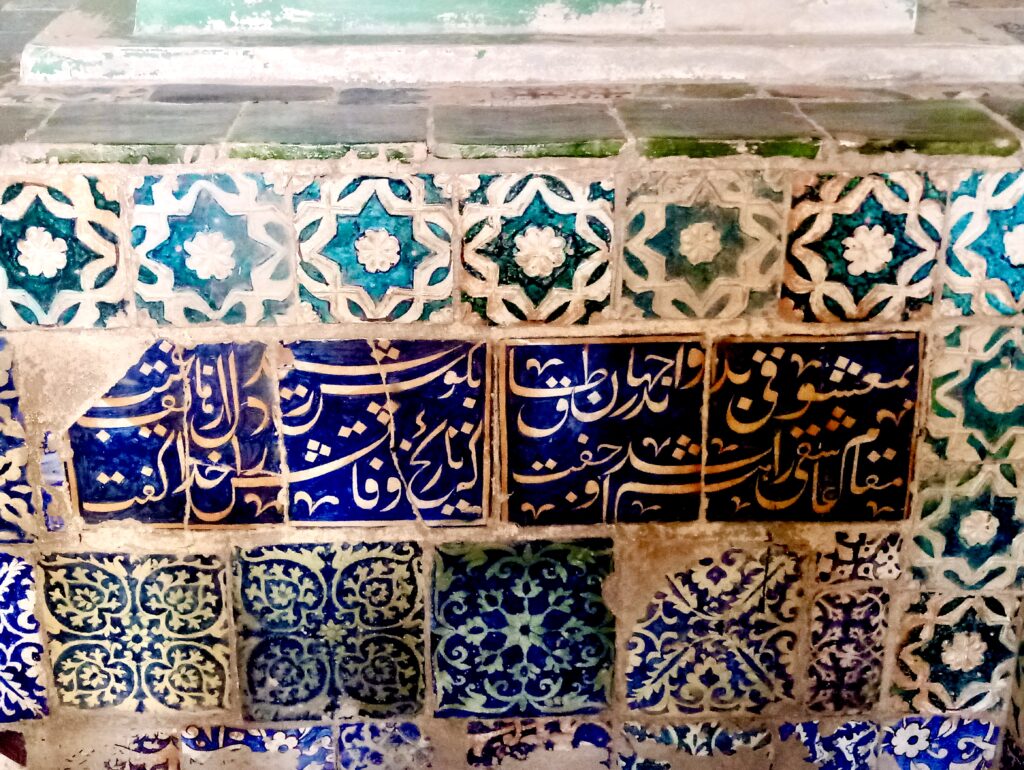
Many people think of Persian primarily as the language of Iran. More informed audiences may also know that it is one of the official languages of Afghanistan and Tajikistan. However, for nearly a thousand years, Persian was much more than the language of a single nation. It was one of the great international languages of Eurasia and served as the principal language of administration, literature, diplomacy, and culture across a vast geographical area.
At its height, Persian was used throughout a territory stretching from western China to the Balkans, and from Kazan in present-day Tatarstan to the Deccan Plateau of India. This immense region encompassed dozens of modern countries and numerous ethnic, linguistic, and religious communities.
Persian functioned not only as an international lingua franca but also as the official language of many of the major states and empires that dominated this region. The Ottoman Empire, the Safavid Empire, the Timurid Empire, the Mughal Empire, and numerous Central Asian khanates all employed Persian in administration, literature, scholarship, and, in certain contexts, religious life. Across much of Asia, it served as the language through which educated elites communicated, wrote, and governed.
The influence of Persian remained remarkably strong until the nineteenth and even the early twentieth century. Its decline was not the result of any inherent weakness but rather of major political transformations that reshaped the region. British colonial rule in India gradually replaced Persian with English. Russian expansion and, later, the Sovietization of Central Asia elevated Russian at the expense of Persian. In Anatolia, the rise of the modern Turkish Republic dramatically reduced the role of Persian in public life, while political changes in regions such as Xinjiang similarly altered the linguistic landscape.
Yet despite these developments, the legacy of Persian remains visible today. Its influence can still be seen in the vocabularies, literary traditions, and cultural expressions of languages spoken across this vast area. Even where Persian is no longer used as an official or administrative language, its historical imprint continues to shape the societies that once formed part of the Persianate world.
2. A Language with Three Millennia of History
Persian has more than 2,500 years of written history, making it one of the oldest continuously attested literary languages in the world. Traditionally, the history of Persian is divided into three major stages: Old Persian, Middle Persian, and New Persian.
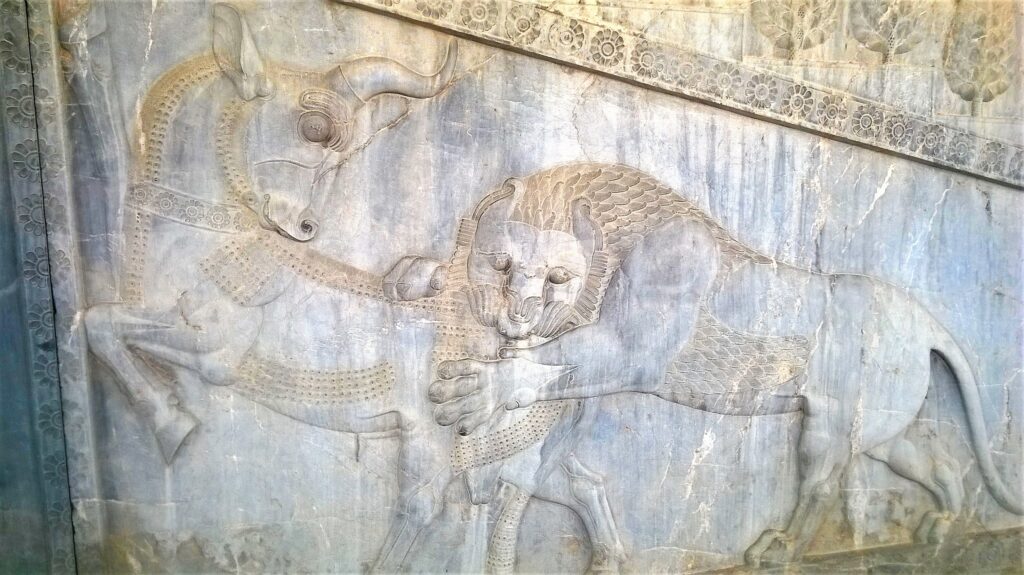
The Old Persian period is associated with the Achaemenid Empire. Old Persian was written in a cuneiform script that was specifically adapted to represent the sounds of the language and was therefore highly phonetic and relatively easy to read. Unfortunately, Old Persian was not extensively used as a written language. Most of the surviving texts are royal inscriptions, and its life as an official written language was relatively short, spanning roughly from the reign of Darius I in 522 BCE until the fall of the Achaemenid Empire in 330 BCE.
The second stage of Persian, the Middle Persian period, is associated with the Sasanian Empire, although it began well before the rise of the Sasanians. It was during the Sasanian period that Middle Persian flourished as a literary, administrative, and religious language.
On the religious side, this period saw the emergence of a rich body of Zoroastrian exegetical and translatory literature. On the literary side, numerous translations were made from languages such as Syriac, Sanskrit, and probably Greek, while original compositions were also produced, although only a fraction of them have survived. The Middle Persian stage represents an important transitional period in the development of the language and serves as the bridge between Old Persian and New Persian.
The third stage, New Persian, is associated with the Islamic period and is characterized by a number of grammatical, phonological, and lexical developments that distinguish it from Middle Persian. One may place the beginnings of New Persian in the seventh, eighth, or ninth centuries, depending on the criteria used, and this stage continues down to the present day.
The history of New Persian is considerably more complex than it is often presented in traditional accounts. It was written in a number of scripts and existed in a variety of regional forms. The language of the ninth century was naturally not identical to the language of the twentieth or twenty-first century, and New Persian itself can be divided into a number of historical phases.
The earliest centuries of New Persian, particularly between the ninth and eleventh centuries, were characterized by significant regional and dialectal diversity. These varieties differed in pronunciation, grammar, and vocabulary. Persian was also written in a number of different scripts. Among these, the Arabic-script tradition and the Judeo-Persian tradition gained the strongest footing and continued to survive for many centuries.
It was during the New Persian period that Persian became a classical language with a rich literary heritage. It was also during this period that Persian spread across a vast geographical area and became the administrative, literary, and cultural language of a large part of Eurasia.
Today, New Persian remains a living language and serves as the official language of three modern states: Iran, where it is known as Persian (Farsi); Afghanistan, where it is officially known as Dari; and Tajikistan, where it is known as Tajik.
3. The Earliest Surviving New Persian Document is in Hebrew Script
One of the most remarkable facts about the history of Persian is that the earliest surviving dated documents in New Persian are not written in the Arabic script, but in the Hebrew script.
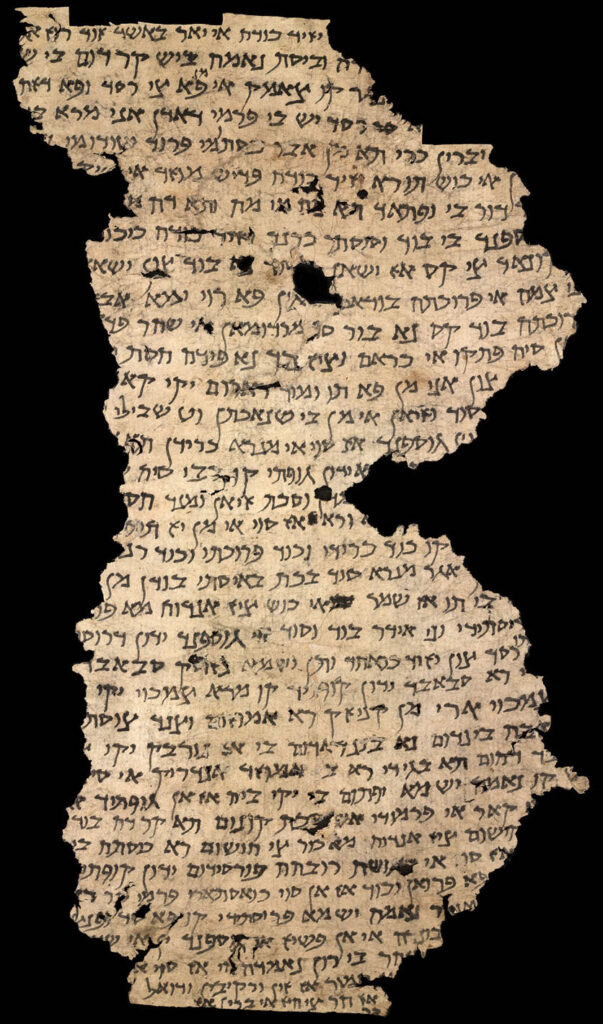
The earliest surviving New Persian text that can be dated with reasonable precision to around 800 CE is a letter discovered by Sir Marc Aurel Stein during his excavations at Dandan-Uiliq (“Ivory House”), an archaeological site located approximately 80 km northeast of Hotan in present-day Xinjiang, China.
The document is a heavily damaged letter written by a commercial agent, probably of Persian-speaking Jewish origin, who appears to have lived in the region of Hotan. The letter was addressed to his commercial center, likely located somewhere in Samarkand. At some point, the document was lost in the desert, where it remained for centuries until it was recovered by Stein’s expedition.
After its discovery, Stein sent the letter to London, where it was studied by the renowned scholar David Samuel Margoliouth, one of the foremost authorities on Judeo-Persian of his time. Margoliouth correctly identified the language of the letter as Persian and initially dated it to the early eighth century. Later scholarship, however, revised this dating slightly, placing the document closer to the late eighth or very early ninth century.
An additional fragment belonging to the same letter was discovered and published in the early 2000s by Zhang Zhan. Together, these fragments, conventionally known as Dandan-Uiliq I and Dandan-Uiliq II, represent the earliest known attestation of New Persian (with the exception of the Tang-i Azao graffity (750AD), if Hennings dating is correct) in any script and, at the same time, the earliest surviving example of a Judeo-Persian text.
4. New Persian Was Written in More Than One Script
Having discussed the earliest New Persian texts written in Hebrew script, it is worth briefly looking at the various scripts that have been used to write Persian throughout its history.
Leaving aside the Old and Middle Persian periods, during which Persian was written in several different writing systems, New Persian, from its earliest centuries onward, was also written in a variety of scripts.
The best-known and ultimately most successful of these is the Arabic script, which remains the official writing system of Persian in Iran and Afghanistan today and has been used for the overwhelming majority of Persian literature produced over the last thousand years.
In addition to the Arabic script, Persian was also written in the Hebrew script by the Jewish communities of the Persianate world. This tradition, known as Judeo-Persian, displays a number of dialectal peculiarities in its earlier stages. Over time, however, it developed into a literary language very close to Classical Persian and produced a number of important literary works, including adaptations of well-known Persian poetic traditions.
Although the Pahlavi script is primarily associated with Middle Persian, it was occasionally used to write New Persian as well. This is demonstrated by a handful Zoroastrian texts, more particularly a few tales preserved in ms. M29, which are written in the Pahlavi script but contain texts in New Persian. Therefore, it is accurate to say that the Pahlavi script served not only as a writing system for Middle Persian but also, in certain contexts, for New Persian.
The Syriac script was also used to write Persian, although evidence for this tradition is extremely limited. A small number of fragments discovered at Bulayïq, near Turfan in present-day Xinjiang, preserve portions of what appears to have been an early Christian Persian literature. Among these fragments are a translation of the Psalms into Persian and a highly damaged medical treatise. Together, they provide rare evidence for the existence of a Christian Persian literary tradition in the early centuries of New Persian. These texts have been studied by a number of scholars, with the most recent editions being associated with Nicholas Sims-Williams.
Another important writing system is the Manichaean script. The majority of Manichaean manuscripts discovered in Turfan are written in languages such as Sogdian, Parthian, and Middle Persian. Some fragments, however, show linguistic features that clearly belong to New Persian, despite preserving many historical orthographic conventions inherited from earlier periods. These texts therefore constitute another important source for the study of early New Persian.
In later centuries, Persian was occasionally written in other scripts as well. One interesting example is the Armenian script, which was used to record Persian texts and translations, including biblical materials (you can read more about it here). Although much less common than the Arabic, Hebrew, Syriac, or Manichaean traditions, Armenian-script Persian nevertheless provides valuable evidence for the history and diversity of written Persian. I recommend reading Artyom Tonoyan’s article on the Caucasian variety of Persian here.
In the twentieth century, Persian was, for a brief period, officially written in a Latin-based alphabet in the Soviet Union. Later, Soviet language policy replaced the Latin script with a modified Cyrillic alphabet. This adapted Cyrillic script became the standard writing system for Tajik Persian and remains in use in Tajikistan to this day.
Taken together, these traditions remind us that Persian was never tied exclusively to a single script. Throughout its long history, the language has been written in a variety of writing systems, reflecting the religious, cultural, and linguistic diversity of the communities that used it.

5. Persian Has Different Names
Persian has different names that are used in various contexts, including the official names of the varieties spoken in different states where Persian is an official language. Insie Iran, the language is commonly called Fārsi which corresponds to Persian in English. In Afghanistan, it is called Dari, and in Tajikistan, it is known as Tojiki (Tajiki in English).
All these names refer to the same historical language, though the varieties have developed slight differences in pronunciation, vocabulary, orthography, grammar, and style. Giving different names to these varieties is closely connected with the nation-building processes and identity formations that took place during the twentieth century. Previously, the language was generally known across the Persian-speaking world as Fārsi or Pārsi (and Persian/Persisch/Persan/Persisk etc. in European languages)
The name Dari is actually an ancient designation connected with the word dar (در), which has a number of meanings but in this case means “court,” referring to the prestigious court variety of Persian (of the Sasanian Empire). In Afghanistan, this historical term was adopted as the official name of the language in the min-twentieth century in order to distinguish it from the Persian of Iran.
The term Tojiki also has an older history, but it became more widely established in the context of Tajik national identity during the Soviet period. Today, Tojiki (Tajiki in English) refers to the Persian variety of Tajikistan, which has a distinct pronunciation from its Iranian counterpart (more conservative than the latter), slightly diverging vocabulary (due to Russian influence, as well as local lexical conservatism), different alphabet (based on Cyrillic), and some grammatical features.
In English, however, Persian remains the traditional name of the language for the Persian of Iran. The use of Farsi in English is a comparatively recent convention, and in many contexts it simply duplicates the native name of the language rather than introducing a separate linguistic category.
6. Persian Has a Simple Grammar
Persian grammar has gone through a long historical development and has undergone major shifts in its structural complexity. Starting with the earliest attestation of Persian — the Behistun inscription of Darius I (510s BC) — we encounter a form of Persian with a complex grammatical structure, including grammatical gender, a case system, and a richer phonological structure with more distinctions and nuances.
However, this state of the language did not last very long. Soon after, even by the end of the Achaemenid period and in the centuries that followed, the grammatical structure of Persian began to become increasingly simplified. The language gradually lost grammatical gender and its complex case system, which was eventually reduced, within a few centuries, to a dual case system in early Middle Persian: the nominative and the oblique cases. Later, in standard Middle Persian, we already observe the complete neutralization of the grammatical case system.
This simplification continued well into the New Persian period. By the time of the earliest monuments of Early New Persian, we find a highly simplified analytical language that lacks grammatical case and gender. Most lexical and syntactic relationships are determined by word order, morphological categories, and the use of prepositions and postpositions.
For this reason, one can actually learn the basic grammar of Persian within a relatively short period of time. It consists of a limited number of very simple rules that can, for the most part, be covered within a few days.
However, does this mean that Persian is a simple language? Certainly not. When a language becomes simpler in one domain, complexity often emerges elsewhere. In the case of Persian, much of the complexity lies in its phraseology and styles: the particular ways in which concepts are expressed, as well as the linguistic patterns and modes of thought that may not be immediately intuitive to a non-Persian speaker.
Persian also possesses an extremely rich lexical corpus, which becomes a significant challenge once one moves beyond basic communication. Furthermore, the writing system itself presents difficulties: the Persian alphabet is not always easy to read for a learner who is unfamiliar with the words they are encountering. As a result, beginners often struggle with the pronunciation of many words, especially because the script does not consistently represent all phonological distinctions.
Another important challenge is the existence of a dual system in Persian: the formal literary language and the spoken language. These two varieties differ considerably in grammar, pronunciation, and vocabulary, and mastering each requires a separate process of study.
Finally, and perhaps most importantly, Persian is a language with a literary history of more than a thousand years. Contrary to what is sometimes assumed, modern Persian — even literary Persian — is not identical to Classical Persian, especially the early Classical period. Therefore, learning modern Persian does not automatically provide complete access to the enormous literary corpus that has accumulated over the past millennium. Different periods have their own styles, lexical choices, and linguistic conventions, many of which are no longer common today.
7. Persian Emerged in Fārs (Persis), but matured in Khurasan
One of the most fascinating aspects of Persian, at least for me, is the fact that it has a very complex history, with many dark spots and gaps in our knowledge, while at the same time its history is often presented to the general public in an extremely simplified (and sometimes inaccurate) manner.
Perhaps one of the most intriguing aspects of the history of Persian is that, originally, it emerged in the region currently located in southwestern Iran, namely the province of Fars, from which the Achaemenids – the original speakers of Old Persian – originated.
By the time of the fall of the Achaemenid Empire, Persian was still the dominant language of that region, but it remained essentially a regional language for several centuries, until the rise of the Sasanians.
The Sasanians, however, created a highly centralized empire that stretched from Marv, Herat, and at times Balkh in the east, all the way to Mesopotamia, where their royal court was located. The Sasanian Empire was historically influential for many reasons, one of the most important being the formation of a state-level Iranian identity as we know it.
The Sasanians also played a crucial role in elevating Persian to an imperial language. Under the Sasanians, Middle Persian functioned as the official language of the state: it was the language of royal inscriptions, administration, bureaucracy, religious institutions, and much of the intellectual and economic life of the empire.
Due to a number of historical factors (some of which remain unclear) Persian gradually began expanding eastward. More specifically, it established itself in Khorasan, a region that had not originally been Persian-speaking. Khorasan had previously been largely associated with Parthian, a related but distinct Iranian language, which shared many features with Middle Persian but nevertheless was a separate language.
Persian gradually replaced Parthian as the dominant language of Khorasan, and by the end of the Sasanian period, it had probably become widespread throughout much of the region. This was due to Khorasan being a major economic and strategic center, located near the eastern and northeastern frontiers of the empire (with lots of troops, priests and bureaucrats moving around).
The next important stage came after the Arab conquest of the Sasanian Empire. Persian continued to expand eastward, moving into Transoxiana (Māwarāʾ al-Nahr), the region historically associated with Sogdiana, and Tokharistan, where it soon replaced the local languages (Sogdian and Bactrian) as well.
Due to various geopolitical developments, very soon the eastern regions of the Abbasid Caliphate gained increasing political autonomy. As local dynasties and rulers acquired greater authority, they began developing their own cultural and literary projects, often centered around Persian.
Persian, which had been developing in Khorasan under somewhat different conditions from its southwestern Fars variety, was adopted as a major court language, particularly under the Saffarids and Samanids (late 9th – entire 10th centuries), who were later succeeded by the Ghaznavids (11th c.). It became the language of court poetry and later of science, administration, and religious writing. As a result, an enormous literary corpus was created in this form of Persian.
Thus, the Khorasani variety of Persian became the dominant literary standard. Later, when the Seljuks expanded into western Iran and were followed by the Mongol conquests, this eastern literary Persian continued to spread westward, gradually replacing or absorbing local varieties of Persian that had developed independently in Fars and elsewhere.
In this sense, Persian made a kind of “return” to its ancient homeland. The literary language of Khorasan became the language of Sa’adi (13th c.) and Hafez (14th c.) (both from Fars), eventually reaffirming itself in its ancient home.
From this point onward, Persian became the dominant literary and administrative language of the Iranian world, as well as one of the major languages of cultural expression across Western and Southern Asia.