Classical Persian Curriculum
Ferdowsi Summer School of Persianate Languages and Literatures
July 6 - 31, 2026, Yerevan
The Classical Persian programme (taught by R. Nikoghosyan) is designed for students at a lower-intermediate to advanced level of Persian who wish to deepen their understanding of Classical Persian grammar, style, and the ability to read Classical Persian texts with a full appreciation of its historical and literary evolution. This course offers a comprehensive introduction to those aiming to work with Classical Persian texts at an academic level, equipping participants with all the necessary philological and linguistic tools for independent research after completion.
Over the course of four weeks, the participants will explore texts of varying difficulty, origins, and historical periods.
In the first week, we will introduce early Classical Persian prose through texts such as the Shahname of Abū Mansūr and Bal’ami’s translation of Tabari’s history, providing a foundational familiarity with Classical Persian grammar.
In the second week, we will focus on 11th-century authors, such as Ferdowsi and Manuchehri Damghani, examining selections from the Shahname and selected qaṣīdas to understand the literary styles and trends in Classical Persian poetry.
The third week will introduce more complex texts, such as the Kalila and Dimna translated by Nasrallah Munshi and the Taẓkirāt-ul-šuʻārā by Dowlatshah Samarqandi, with a particular focus on reading Persian manuscripts and understanding their stylistic and grammatical nuances.
In the fourth week, we will study one of the impactful female poets, Mahsati Ganjavi (12th c.), alongside selections from the Dīvān-e Šams-e Tabrīzī of the great sufi Mowlana Jalal ed-Din Balkhi (Rumi).
After the completion of the course the participants will be able to confidently work with and research a wide range of literary Classical Persian texts, both in printed and manuscript versions.
Week 1. The Rise of Persian Literature: Early Classical Persian Prose
On the first week of the Classical Persian course, we will be examining two of the earliest surviving prose texts in Early Classical Persian: the surviving prose introduction (dibāča) of the Shahname of Abu Mansūr, and Bal’amī’s translation of Ṭabarī’s Tārīx al-rusūl wa al-mulūk (History of Prophets and Kings). These two texts stand at the sources of the rising Persian literature, both of them having been composed almost a decade apart, in mid-10th century. The simplicity of their language and the engaging style make them perfect texts for introducing the main features of the Classical Persian grammar, such as the usage of tenses, prepositions and syntax, all of which in many points differ from Modern Standard Persian.
Day 1. The Dibāča of the Šāhnāma of Abū-Mansūr. Part 1.
Text: Mohammad Qazvini (ed.), Dowre-ye kāmel-e bist maqāle-ye Qazvini, jj. 1 va 2, 1332 A.H. š. (1954 AD). Jeld-e 2, ss. 5-90.
Day 2. The Dibāča of the Šāhnāma of Abū-Mansūr. Part 2.
Text: Mohammad Qazvini (ed.), Dowre-ye kāmel-e bist maqāle-ye Qazvini, jj. 1 va 2, 1332 A.H. š. (1954 AD). Jeld-e 2, ss. 5-90.
Day 3. Tārīkh-i Bal’amī: The reign of Ardashir. Part 1
Text: Malek-oš-šo’arā Bahār (ed.), Tārix-e Bala’āmī, be kušeš-e Mohammad Parvin-e Gonābādi, dar 2 mojallad, 1353 (čāp-e dovvom). ss. 874-886.
Day 4. Tārīkh-i Bal’amī: The reign of Ardashir. Part 2
Text: Malek-oš-šo’arā Bahār (ed.), Tārix-e Bala’āmī, be kušeš-e Mohammad Parvin-e Gonābādi, dar 2 mojallad, 1353 (čāp-e dovvom). ss. 874-886.
Week 2. Forging the Classical Tradition: Epic and Court Poetry
The Classical Persian tradition took its definite shape in the first half of the 11th century, a period marked by the flourishing of the Ghaznavid court and the articulation of many traditions that would later define Classical Persian poetry. During this era, poets such as ʻUnṣurī, Manūčihrī Dāmghānī, and Farrukhī Sīstānī emerged, contributing significantly to the development of poetic forms and themes.
Moreover, the 11th century also witnessed the crystallization of the epic tradition, most notably through the composition of the Šāhnāma by Firdawsī, arguably the most influential epic poem in Persian literature. This period also gave rise to subsequent epic works, such as the Garšāsp-nāma and the Farāmarz-nāma, as well as other romances composed in the mutaqārib meter.
In the second week, we will focus on two key works from this period. First, we will explore selections from Firdawsī’s Šāhnāma, specifically selected passages from the reign of Alexander, to introduce participants to the Šāhnāma’s language, style and historical context. Second, we will present selected qaṣīdas by Manūčihrī Dāmghānī, showcasing the broader poetic devices and themes prevalent in early Ghaznavid poetry.
Day 1. Abū-l-Qāsim Firdawsī. Šāhnāma. Pādišāhī-yi Iskandar. Part 1
Text: Abu’l Qasem Ferdowsi. The Shahnameh (The Book of Kings). Volumes 5-6. Edited by Djalal Khaleghi-Motlagh. New York.
Day 2. Abū-l-Qāsim Firdawsī. Šāhnāma. Pādišāhī-yi Iskandar. Part 2
Text: Abu’l Qasem Ferdowsi. The Shahnameh (The Book of Kings). Volumes 5-6. Edited by Djalal Khaleghi-Motlagh. New York.
Day 3. Manūčihrī Dāmghānī. Qasīda: Dar wasf-i ǰašn-i Mihragān wa madḥ-i Abū Ḥarb-i Baxtyār
Text: Divān-e Manūčehrī Dāmghānī. Ed. by M. Dabīr-Siyāqī. Tehrān. 1375/1997 (2nd ed.). pp. 101-102.
Day 4. Manūčihrī Dāmghānī. Qasīda: Dar madḥ-i Sulṭān Masʻūd-i Ghaznawī
Text: Divān-e Manūčehrī Dāmghānī. Ed. by M. Dabīr-Siyāqī. Tehrān. 1375/1997 (2nd ed.). pp. 39-42.
Week 3. How to Read a Manuscript? Introduction to Persian Manuscript Tradition
In the third week, we will delve into the Persian manuscript tradition by carefully examining and reading two key manuscripts: one in the naskh script and the other in the later nasta‘liq script. The goal of this week is to provide students with a comprehensive understanding of Persian manuscript history, orthography, and dominant stylistic features. By the end of the week, participants will gain the skills and confidence needed to navigate Persian manuscripts, spanning from the earliest examples in the mid-11th century to those from the 19th century.
Beyond the two main manuscripts, we will explore a variety of other significant manuscripts, appreciating their miniature paintings and examining some of the most renowned Persian manuscripts. We will also learn about digital resources for accessing these manuscripts and delve into the evolution of Persian orthography and script.
Additionally, we will study famous texts written in rhyming prose, such as the elegant and complex Kalila and Dimna, translated by Nasrallah Munshi, as well as the later Taẓkirat-ul-šuʻārā by Dawlatshah Samarqandī. Through these readings, participants will gain practical experience in working with Persian manuscripts and understanding the nuances of rhymed prose.
Day 1. Naṣrullāh Munšī’s translation of Kalīla va Dimna. Part 1.
Manuscript: Persian MS 68. The John Ryland’s Library (Manchester).
Text: Abo-l-Maʻālī Naṣrollāh-e Monšī. Tarǰome-ye Kalīle va Demne. Ed. by M. Minovī Ṭehrānī. Tehran. 1374/1996 (13th ed.).
Day 2. Naṣrullāh Munšī’s translation of Kalīla va Dimna. Part 2
Text: Abo-l-Maʻālī Naṣrollāh-e Monšī. Tarǰome-ye Kalīle va Demne. Ed. by M. Minovī Ṭehrānī. Tehran. 1374/1996 (13th ed.).
Manuscript: Persian MS 68. The John Ryland’s Library (Manchester).
Day 3. Dawlatšāh Samarqandī, Taẓkirāt-ul-šuʻārā. Part 1.
Manuscript: Persian MS 54. The John Ryland’s Library (Manchester).
Text: Dawlatshah of Samarqand, The Tadhkiratu ʼsh-shuʻara, by Ed. G. Browne. London/Brill. 1901.
Day 4. Dawlatšāh Samarqandī, Taẓkirāt-ul-šuʻārā. Part 2.
Manuscript: Persian MS 54. The John Ryland’s Library (Manchester).
Text: Dawlatshah of Samarqand, The Tadhkiratu ʼsh-shuʻara, by Ed. G. Browne. London/Brill. 1901.
Week 4. Mahsati and Mawlana: Voices of Human and Divine Love
In the fourth week of the course, we will explore two distinct poets, each representing unique genres within classical Persian literature. The first poet is Mahsati Ganjavi, a notable female poet from the Caucasus, specifically the ancient city of Ganja. Although her exact lifetime is uncertain, she was likely a contemporary of Nizami Ganjavi. Mahsati is celebrated for her poetic talent, though her works are relatively few. We will read selected ghazals and quatrains from her divan, offering a glimpse into her distinct voice and style.
The second poet is Mawlana Jalal al-Din Balkhī (Rumi), one of the most prominent figures in Sufi literature. We will examine selected ghazals from his Dīvān-e Šams-e Tabrīzī, exploring the depth and elegance of his Sufi poetry.
Through the careful study of both poets, we will deepen our understanding of Persian literary tradition, examining their unique styles, linguistic nuances, and the common threads that tie them to the broader literary heritage.
Day 1. Mahsatī Ganjawī. Ghazals: Dar faghānam az dil-i dēr āšnā-yi xwēštan; Kāškī anguštwānaš būdamī; Šab-ē dar barat gar biāsūdamī
Text: Dīvān-e Mahsatī Ganjavi, ed. by Ṭāherī Šahāb. Tehrān, 1347/1969 (3rd ed.). pp. 74-76.
Day 2. Mahsatī Ganǰawī: Quatrains 1-10.
Text: Dīvān-e Mahsatī Ganjavi, ed. by Ṭāherī Šahāb. Tehrān, 1347/1969 (3rd ed.). pp. 32-34.
Day 3. Mawlanā Jalāl-ud-dīn Balkhī, Dīvān-e Šams: Man bē-xwad u tō bē-xwad, mārā ki barad xāna;
Day 4. Mawlanā Jalāl-ud-dīn Balkhī, Dīvān-e Šams: Gar jān-i ‘āšiq dam zanad, ātaš dar īn ‘ālam zanad.
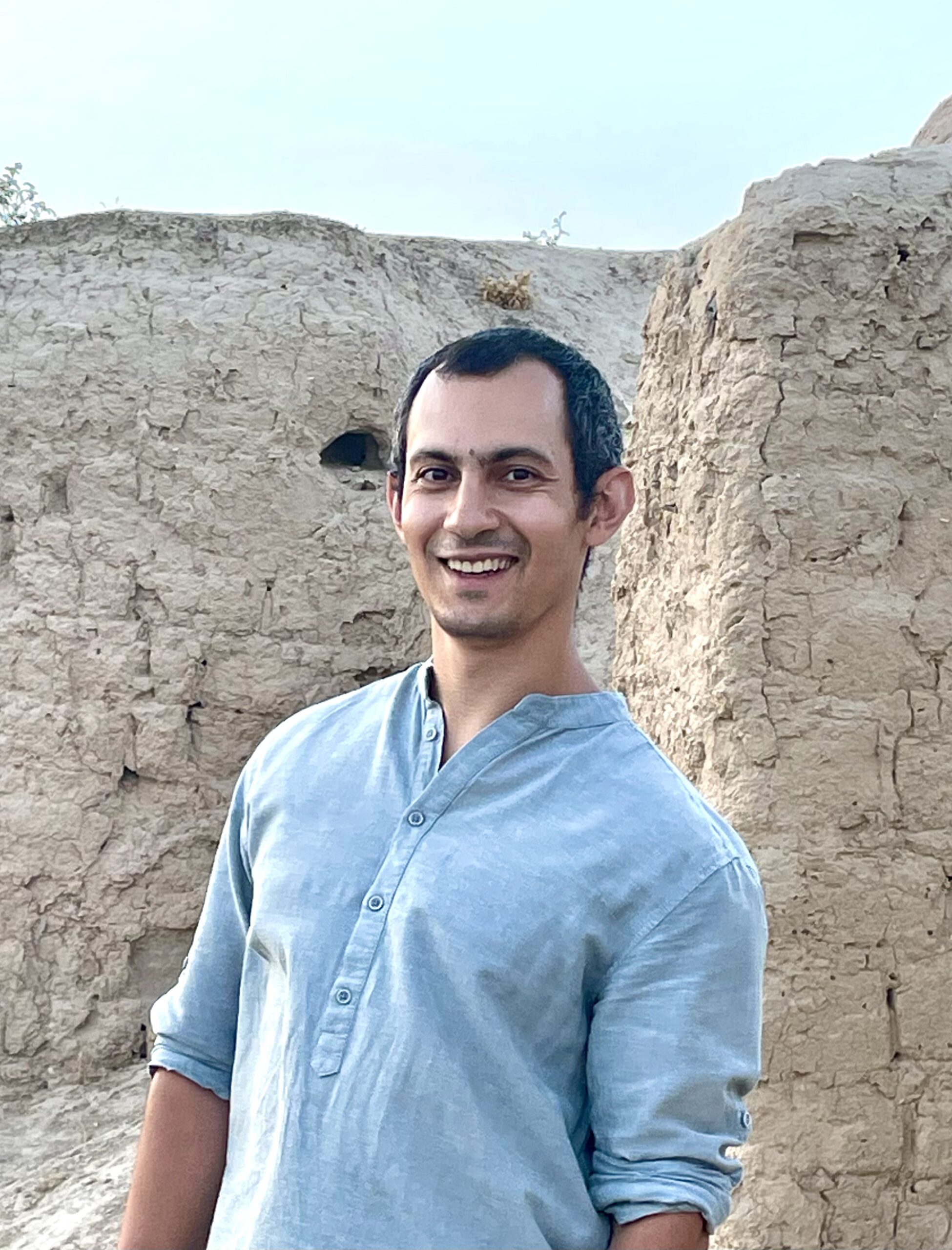
RUBEN NIKOGHOSYAN is an independent scholar of Iranian studies and the founder and director of the Ferdowsi School of Persian Literature. His research focuses on Persian language and literary traditions across periods, including Middle Iranian philology, Early Classical Persian prose, and the role of Persian literary culture from antiquity through the medieval era. He works on the continuity between ancient and Classical Persian literary forms and actively engages with textual witnesses that illuminate linguistic history and cultural exchange. One of his current research projects involves the editing and analysis of some Early Judeo-Persian letters and texts from the Bamiyan Papers, medieval documents written in Hebrew script that shed light on Jewish communities and Persian linguistic practice in the eastern Islamic world.